Solo Female Travel in Morocco

Morocco travel

Solo female travel in Morocco is not for a timid traveler. And, while I really do enjoy traveling by myself, I have a love hate relationship with this country. Morocco is at the top of my list as one of most difficult solo trips I have taken and it was even more complicated by being a woman. Constantly drawing a man’s attention, and not in a good way, was just one issue. Arguing with people in French when my French is in a constant state of what I would call rusty, was another. Morocco can feel overwhelming, even if you have friends to lean on. It can be even more intimidating traveling by yourself.

Solo Travel: The Truth About Traveling Alone

I spent 10 days traveling as a solo female in Morocco and I saw several parts of the country. Each location had a different feel to it, and I was on edge during most of my trip. My first stop was in Marrakesh and it started out a tad rough when a taxi driver refused to listen to me. I repeatedly told the driver that I did not want a tour of the city, but he refused to take me to the destination I had requested. When he finally dropped me off, he upped the price of our original negotiated price.

As I tried to get out of the car, he grabbed my arm to try and force me to stay in the car. My very strong tone in limited French saved me and I was able to argue my way out of the situation. This all took place on my first day in Morocco, so it made me a little nervous for the rest of my trip.

After leaving Marrakesh, I did a 4 day trek through the Atlas Mountains as well as an overnight desert tour. The tour guide was a lifesaver, as I am not sure it would have been wise to travel without one as a solo female traveling in Morocco. I was initially worried about riding with two men through the mountains by myself. However, it turned out to be alright and they kept me from being harassed by other men during the trip.

That all ended when I arrived in Fez. My hotel was nice and located outside of the medina. However, walking through the medina was frustrating even when I had a male tour guide. Outside of the stares, cat calls, and men mumbling under their breaths as they passed me on the street,  a guy aggressively followed me through the medina.

I know this will sound crazy, but if I had to do it all over again, I would still be okay with solo travel in Morocco. However, I would have done a better job mentally preparing myself for the many frustrations I experienced. Here are a few tips that I wish I had followed:
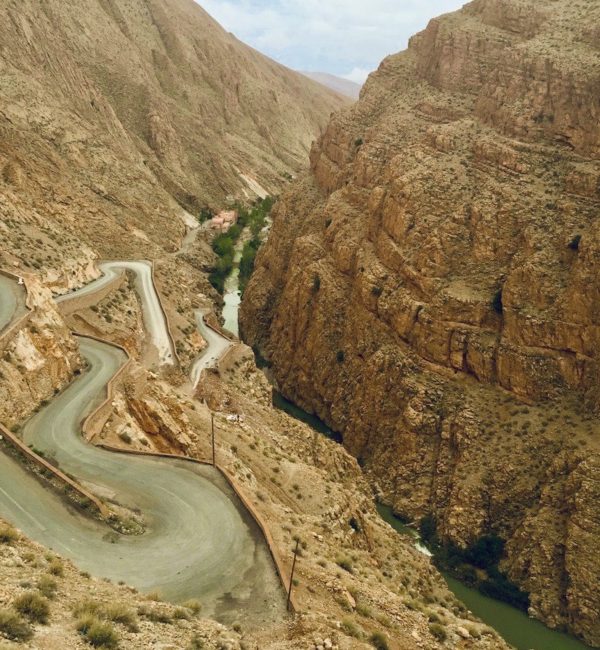
Morocco

Do some planning

I highly recommend that you do some pre planning before arriving in Morocco regardless of whether or not you are doing solo female travel in Morocco. Get a feel for some of the culture, customs and norms of Morocco before your trip. It will help you to look like you know what you are doing on the street. And, that will help limit unwanted attention. It will also give you the confidence not to cave into unofficial tour guides. Tour guides seem helpful, but ultimately want your money. This may sound contrarian, but the easiest time I had during my trip was when I joined a tour group or hired an official guide. That generally created a buffer between me and strangers. I really liked using Authentic Morocco  and Viator.com to book my tours.

Dress Modest

Remember that Morocco is a Muslim country. It is not necessary to cover your head, but you should dress modestly. Wear long pants, skirts and shirts that cover the arms. As a solo female traveling in Morocco, I think some sort of cover will help you not draw as much attention. 

Lodging

I am not a budget traveler, so I had no issue staying in nice hotels in the major cities.  I am not saying you must stay in the most expensive hotels to feel safe.  However, you should take time in choosing lodging, read lots of hotel reviews and do some research about the location.

Shared cabs

I wish I knew that sharing a cab is normal in Morocco. Do not be surprised when a cab pulls over to pick you up and there are already several people in the cab. You will probably feel very uncomfortable, especially if you have to squeeze in between a bunch of men.

Someone will keep you company!

Even if you are a solo female traveling in Morocco, it is really hard to really be alone. The fact that you are enjoying time to yourself is an invitation for Moroccans to come chat with you. I do not think this only pertains to Morocco, but it stood out to me during my trip. Frankly, it is nice that people are friendly enough to make sure you are enjoying your time. Consider returning the kindness and take a moment to get to know Moroccans!
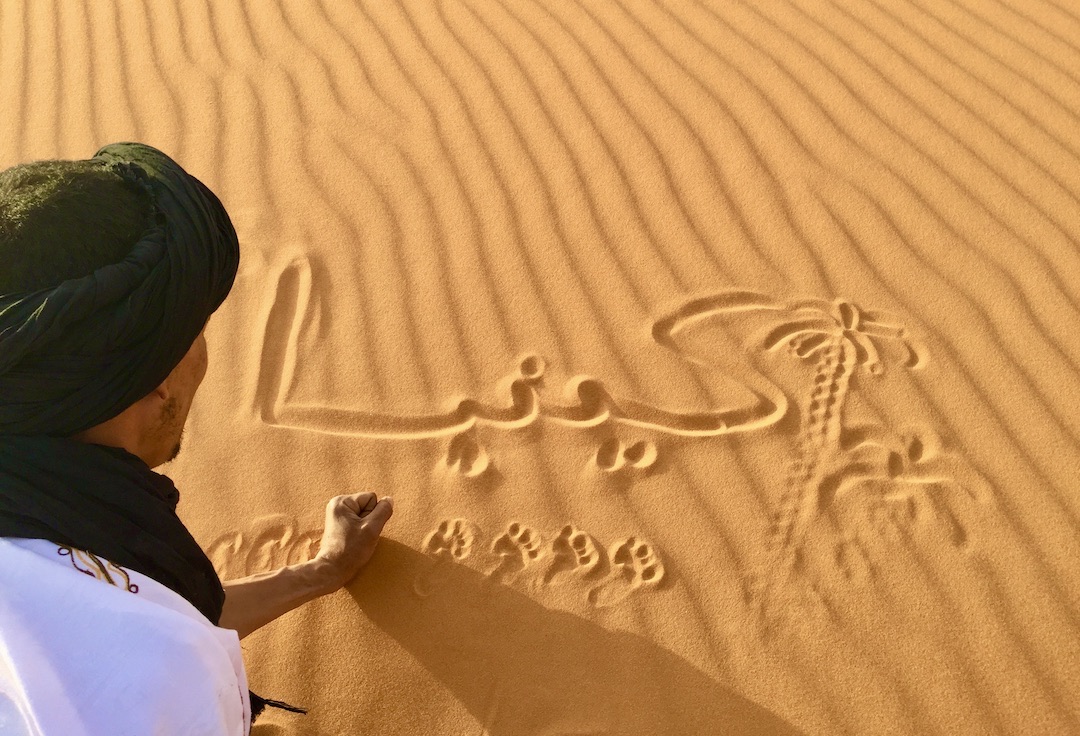
Bucket List: Amazing Moroccan Desert Tour

[penci_fancy_heading p_title=”” _title_typo=”font_family:%3A” _subtitle_typo=”font_family:%3A” _desc_typo=”font_family:%3A” css=”.vc_custom_1575041127845{margin-bottom: 75px !important;}”]Visiting Morocco was such an interesting trip. As part of my bucket list travels, I wanted to spend at least one night in the Moroccan desert. Even if it was not on my list, a trip to Morocco would not have been complete without spending the night in the desert. I was happy that I was able to fit in an amazing Morocco desert tour into my travels![/penci_fancy_heading][penci_fancy_heading subtitle_tag=”h4″ p_title=”How to get there” title_tag=”h6″ _use_separator=”yes” separator_border_width=”2″ _title_typo=”font_family:Acme%3A%22regular%22|font_style:400%20regular%3A400%3Anormal” _subtitle_typo=”font_family:%3A” _desc_typo=”font_family:%3A”]I spent several days in Marrakesh before I started making my way through the Atlas Mountains on my way to Fez, included stops at Ait Benhaddou, Dades Gorges, and World Heritage Site, Ouarzazate. After a very interesting tour to that point, I finally reached what ended up being my favorite part of the trip. The desert!

I was a little nervous at first because I was traveling by myself with two male guides. I also found out on my way to the edge of the Erg Chebbi desert that I would be the only person staying in the camp overnight. All of my worries ended up being for nothing because my desert tour was one of the highlights of my vacation in Morocco.

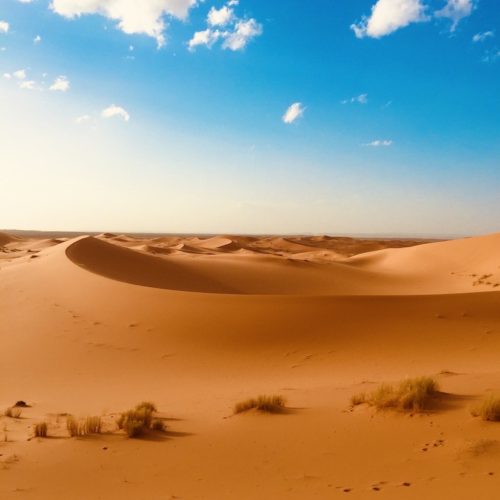
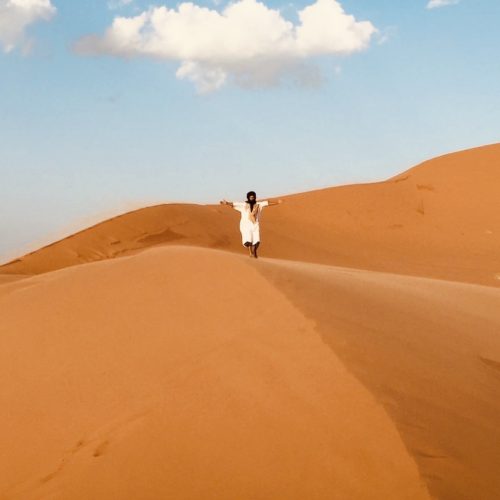
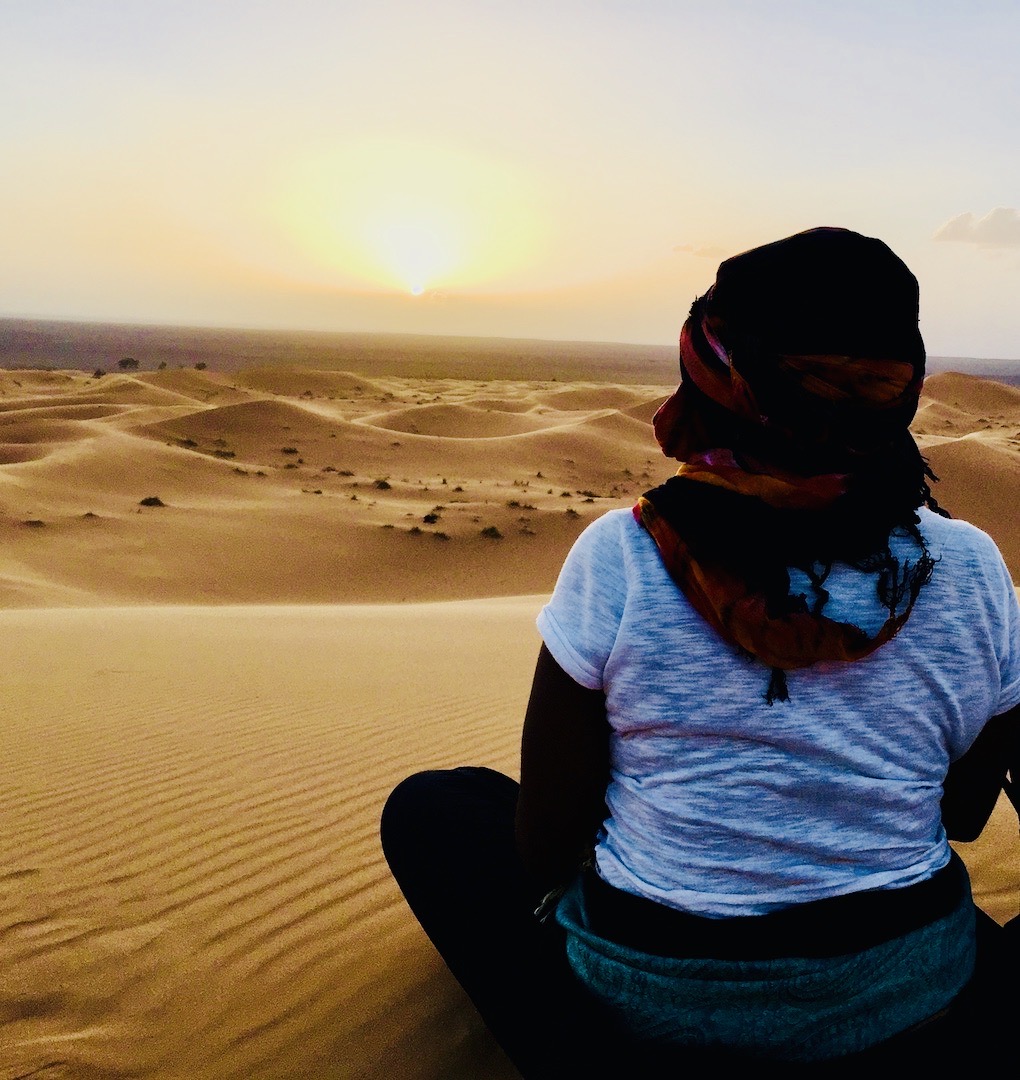
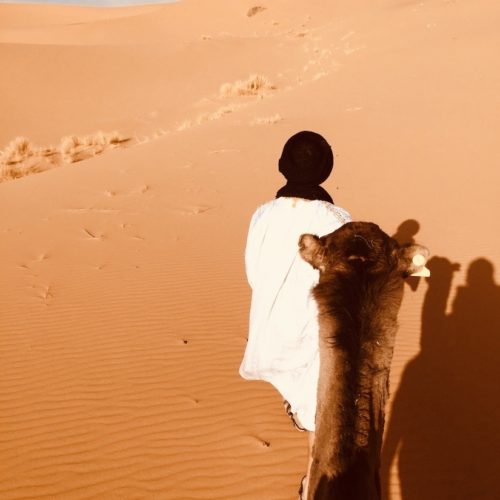
Once I arrived at the edge of Erg Chebbi, I alone mounted a camel with a guide and we started the trek into the desert. Wow…it was so beautiful. Just me, the camel, and the guide surrounded by golden sand dunes. My camel was quite stubborn and did not want to walk, but it did not bother me at all. We made it to a great location in the absolute middle of nowhere, and started hiking the dunes.

[/penci_fancy_heading]

Morocco_desert
Morocco_desert
Morocco_desert
[penci_fancy_heading p_title=”What to expect” title_tag=”h4″ _use_separator=”yes” separator_border_width=”2″ _title_typo=”font_family:Acme%3A%22regular%22|font_style:400%20regular%3A400%3Anormal” _subtitle_typo=”font_family:%3A” _desc_typo=”font_family:%3A”]Let me just say that I never want to be trapped in the desert in Morocco during the middle of summer. I can see why so many crazy movies have been filmed in the Moroccan desert. It is a harsh environment and the sand is so fine that it gets trapped in all of your hair, including your eyelashes!
However, even in such a harsh environment, there is a calm feeling that overcomes you by being there. After playing in the Moroccan sand, we waited, watched and relaxed for quite some time to watch the sunset. It was amazing. Afterwards, I climbed back on the camel and headed to the camp.

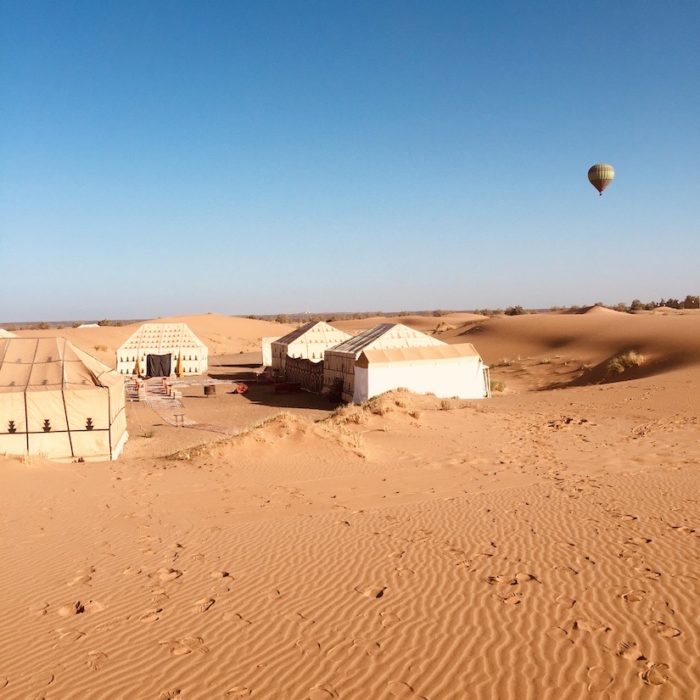
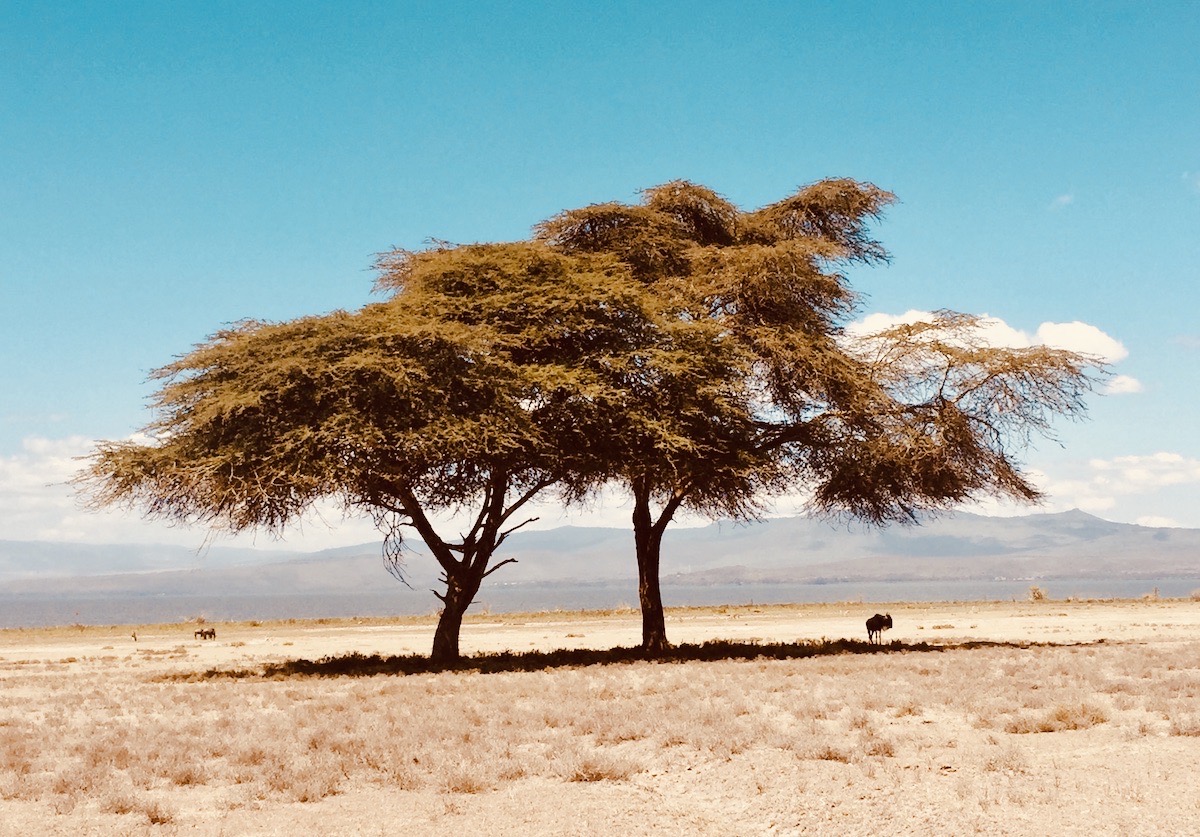
I decided to stay in the luxury tented camp in Morocco. After so many safaris in Kenya, I could not imagine staying in anything besides a luxury camp. As the sole person at the camp for the night, it was a little strange but nice. I sat out in the quiet and took in the beautiful stars in peace.

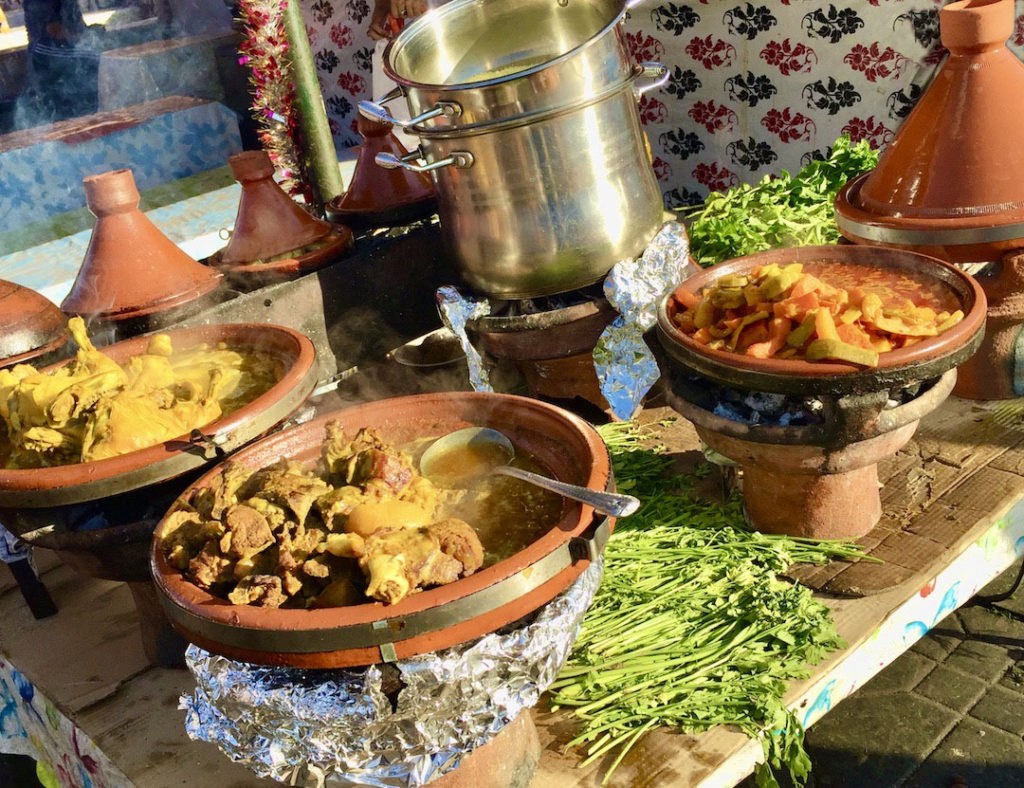
I love the food in Morocco, and my food experience was just as great in the desert. There were a few Berbers at the camp with me, and they made me a huge feast. I stuffed my self silly on Moroccan food. Chicken tagine, beef with prunes tagine, couscous tagine, two veggie tagines, salad and soup were all placed before me.  They also made me delicious deserts and a provided bottle of red wine. I finished the night sitting under the stars with a good book.[/penci_fancy_heading]

Morocco_desert
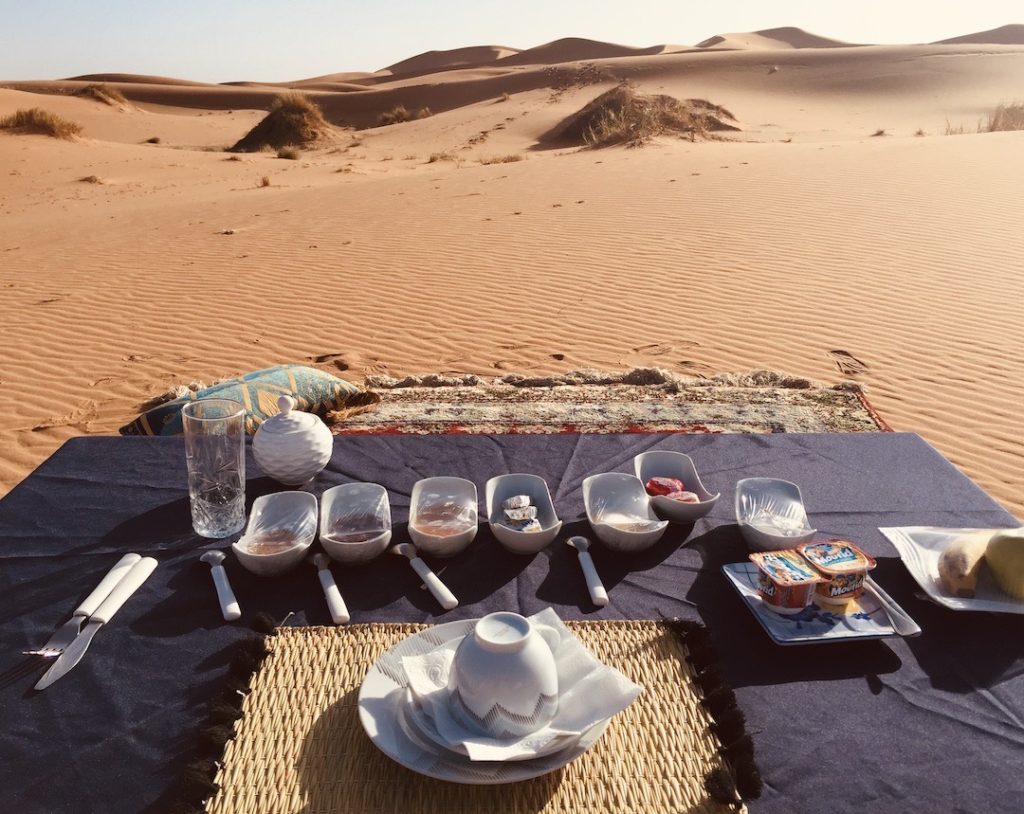
[penci_fancy_heading p_title=”” _title_typo=”font_family:%3A” _subtitle_typo=”font_family:%3A” _desc_typo=”font_family:%3A” css=”.vc_custom_1575037832072{margin-top: 50px !important;}”]After a good night’s rest, I set my alarm to get up at 6am and climbed the sand dunes to watch the sunrise. It was a peaceful morning as I sat in by myself and watched the morning sun. Afterwards, I enjoyed a nice breakfast in the Moroccan desert.[/penci_fancy_heading]
Morocco_desert
[penci_fancy_heading p_title=”How to prepare” title_tag=”h4″ _use_separator=”yes” separator_border_width=”2″ _title_typo=”font_family:Acme%3A%22regular%22|font_style:400%20regular%3A400%3Anormal” _subtitle_typo=”font_family:%3A” _desc_typo=”font_family:%3A”]

Do research on tour companies. There are several tour companies in Morocco that provide desert tours, but I recommend Authentic Morocco Private Tours. They were great and everything was as promised. I also used them to book a private tour of the medina in Fez. They took care of me every step of the way and both the driver and tour guide protected me from unwanted attention.

You get what you pay for. Morocco is no different than the rest of the world. You get what you pay for. If you want to sleep in a plush bed and have running water, then will have to pay a little extra. I think it is worth it, especially considering the environment.

Pack appropriately. Temperatures fluctuate in the Moroccan desert. Not only can it go from extreme between cold in the winter to over 100 degrees during the summer, but it can be quite extreme in one day. It is not uncommon for a summer night to feel very cold. Your packing list for Morocco should include clothes to dress in layers. Also, take a scarf with you to cover your head and face. If it is at all windy, sand will definitely be everywhere. During the winter, I recommend packing a sleeping bags for extra warmth at night.

Stay hydrated. Drink lots of water during the hot Moroccan summers. You may not feel like you are sweeting because it is such a dry heat, but you can easily get dehydrated.

Protect your skin. You are likely to be on your camel ride for several hours. Make sure you wear sunscreen.[/penci_fancy_heading]

Travel to Morocco: What Surprised Me

Morocco

Of all of the African countries listed on my bucket list, Morocco was at the top of my list. I had been looking forward to visiting Morocco for a very long time. Due to the timing of my trip, I ended up traveling solo, which I never mind doing.  Overall, it was a good trip but not quite as I expected. I am not sure what I imagined it would be like. Well, that is not true. I have spent quite a bit of time in Spain, and for some reason I expected Morocco to feel similar to Spain. The Moors from North Africa impacted Spanish culture. Arab and Berber Muslims who crossed the Strait of Gibraltar and conquered parts of present-day Spain influenced Spanish language, culture, and dance.

I cannot tell you how much I LOVE Spain. My dream is to retire in Seville! But, this is a post about Morocco. Morocco is not the Spain of North Africa, as I thought. Outside of some architecture aspects, it is quite different in almost all respects. I will start by saying that I am glad I took this trip. There were a lot of great highlights. However, even though I have lived in Africa and I have visited Arab countries, I was still not prepared for my cultural experience in Morocco. While I never really felt unsafe, sometimes being solo complicated my travels. My travel to Morocco was filled with surprises. Here are the good, bad, and the ugly things I wish I knew before my trip to Morocco.
Old world feel,

I’m going to start off with what I loved most about Morocco…its old world feel and the food! Traveling through Morocco almost makes you feel like you have stepped back in time. A time when the community helped and served each other to accomplish the most basic things in life. The donkey is still the main form of transportation for many Moroccans. You will definitely see a lot of donkeys or mules used to move people and goods in the medinas, especially since a lot of streets are too narrow for cars. Also, do you remember the last time you got your meat from the butcher? Probably not, since for most Americans that time has long since passed.  In Morocco, you notice that:

  • You can drop off your bread dough at the baker and he will bake it for you.
  • Chickens are usually bought alive because they have to be slaughtered based in Islamic law. Butchers take care of that for you.
  • Got fresh ground meat? Someone will grind it for you while you wait.
  • Most dresses are handmaid.
  • Someone will make you fresh philo dough for all of your pastillas, desserts and meat dishes.

Moroccan Food

Morocco food was a highlight for me. However, I will say up front that I though Moroccan food was pretty much the same everywhere I went, but I still loved it. I ate a lot of lamb, beef, or chicken tagine. Tagine is a Maghrebi dish which is named after the earthenware pot in which it is cooked. Inside of that wonderful pot, Moroccans prepare an aromatic stew. When properly cooked, the meat is super tender and flavorful. I never had a tagine dish that was not fresh, hot and delicious.

Solo travel in Morocco

One dish I wish I had discovered earlier in my trip is pastilla. It is a wonderful meat pie based on a sweet and savory combination. The filling, which usually consists of pigeon or chicken, is enclosed in several layers of an extremely thin dough called warkaor warqa (sheet of paper, in Arabic). If you get the opportunity, you can see ladies making the dough in the market. Do not leave Morocco without eating this dish!

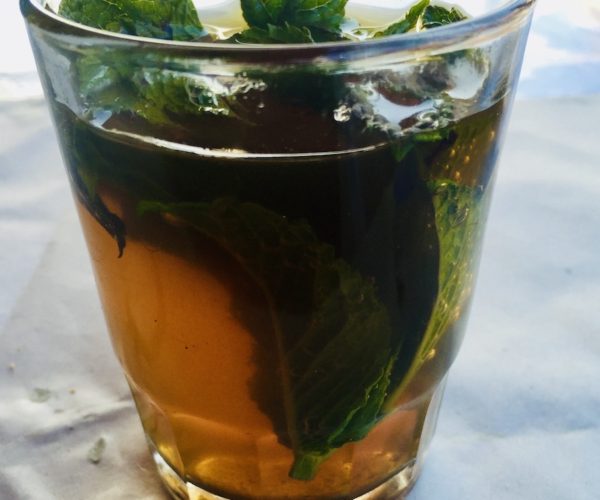
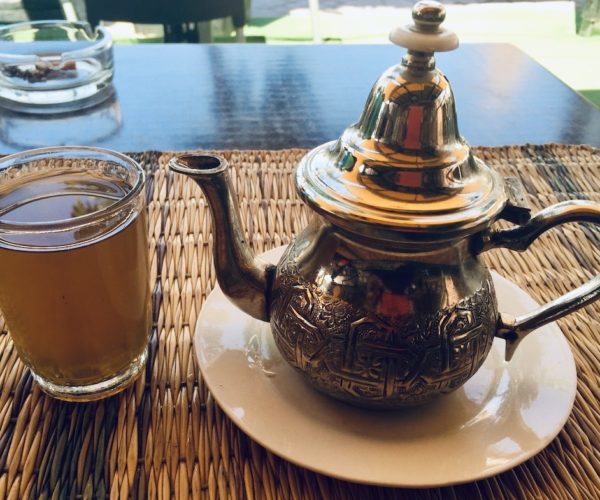
Do not forget to drink my three favorite beverages in Morocco; mint tea, fresh orange juice, and red wine. They make mint tea with Chinese gunpowder green tea and spearmints. Moroccans drink this tea with LOTS of sugar. They will usually add in the sugar for you, so let them know if you are like me and do not like super sweet tea. I drank this tea all the time while I was in Morocco.

Moroccans also are famous for their fresh orange juice. You will never buy orange juice out of the supermarket again once you have a taste of Moroccan OJ. Some say it is the best in the world. Best place to get it in the markets or medinas, but I am sure you can also get it at restaurants.

Finally, you must try Moroccan wine. Unlike many Muslim countries, you can drink in Morocco. Thank goodness, because the red wine is quite good. You can buy wine and alcohol in most major supermarkets and restaurants.

Take a cooking class. Taking a cooking class on every continent is on my bucket list. Up to this point, I had not taken a class in Africa. Since Morocco has fantastic food, I had to do it.We cooked a few of Morocco’s traditional dishes like tagine, salads, and “Msemen,” which is a folded Moroccan crepe. Of course, like most cooking classes, we had a feast after we prepared all of our dishes. I booked my class through Viator.com and took the Farmhouse Cooking Class from Marrakech. I enjoyed the experience and learned a lot about cooking Moroccan food.

Do a food tour. Finally, I did a Tasting Trail by Night food tour in Fez through Plan-it Fez. Food tours are a must for me on my trips because you either discover mom and pop restaurants you would have never otherwise found or you get to discover new cuisine. This food tour was a stretch for me. I am an adventurous eater, but you will not catch me eating bugs or brain. Bugs were not on the menu during my tour, but brain was. However, my guide did not pressure me to eat it. I did, however, enjoy snail soup, beef tongue and cheek, and preserved meat.  Preserved meat is kind of weird, which is preserved in salt and fat, but it tasted way better than I expected. I also tasted about 12 different types of Moroccan honey, which is a must.

You might also enjoy: Thailand Food Tour: A Taste of Bangkok

Avoid Scams and Rip Offs

Now that I have spent time telling you about all of the yummy food to eat in Morocco, let me address one of my biggest pet peeves about this country. Let me start by saying that nothing in Morocco is free!! Moroccans are kind people, but they want to be paid for that kindness. I hated worrying about being taking advantage of as a foreigner for the entire duration of my trip, which was 10 days. By the time I arrived in Morocco, I had already traveled to over 30 countries. I am very much aware that in many developing countries, negotiating and bargaining is a way of life. I get it! But, it really wore me down on this trip. Here are a few of my thoughts to help endure what you will encounter and help you avoid scams and rip offs while in Morocco.

Research the cost of cab fare. Take some time before you plan to hop into a taxi to do some research. I found a great website called MoroccoCab that can assist you. Always negotiate your cab fare before you get in the vehicle! I learned this from the moment I stepped out of the airport. Before I had arrived in Marrakech, I had done some research about how much I should pay for a cab ride from the airport to the hotel.

Several of the cab drivers wanted to charge me double the normal fare. Once I found someone willing to take what I knew to be a fair price, it turned out he was not even the driver. He haled what I had hope to be a legit cab. When I get into the car, the driver asks me how much do I want to pay. When I quote him the price, he claimed “that is the day price.” I had to fight with the drive to get him to accept what I knew to be the appropriate fare.

Be clear about your destinations. As I have said, Moroccans are nice and they are proud of their beautiful country. Cab drivers will want to show you their city as they drive you to your originally stated destination. Be mindful that if you choose to be “shown” around, the negotiated price you agreed to when you got in the vehicle is now out the window. However, you will not find that out until you have arrived at your final destination and the driver quotes you a new price two to three times higher than the original price.

I am not suggesting that you do not take advantage of a local driving you around to unscheduled destinations, but I would recommend that you immediately renegotiate the price. I will note, that even though I made it clear that I did not want to be driven around, my driver disrespected my wishes, and then tried to charge me almost four times the originally negotiated price. Lucky for me I had enough French to argue with the driver.

• Do not use unofficial tour guides. This is easier to fall victim to than you think, especially in big market places like Jemaa el-Fnaa and tourist sites. It will be very clear to Moroccans that you are a foreigner. Someone may approach you, start walking along side you, and strike up what seems to be an innocent conversation. They will ask you questions like, “where are you from?” and “how long have you been here?” They will seem very impressed that you have traveled such a long way just to visit Morocco.

Then they may ask you something like, “have you been to the best pottery shop in Marrakech? It has the best pottery in town and is very affordable.” It may even be more innocent, such as a Moroccan pointing to different locations of interests. Do not fall into any of these traps. Do not let anyone guide you anywhere unless you are committed to paying them for their service. A few things to help you avoid this trap are to:

  • Have a plan and stick to your plan. Go over your plan before you leave your hotel.
  • Look like you know where you are going as it may help you to draw less attention.
  • Ultimately, be polite, but say no thank you and keep walking!

• Know what you are paying for. Morocco has great olive and argan oil and saffron. However it is not all real. Many places mix the oil with vegetable oil and god knows what they use to trick you into believing that you are buying saffron. Best bet is to do your research before purchasing. Separately, I swear by using official tour guides as the best way to see Morocco. However, there were a few times when the tour guide rushed us through our trip so that they could take us to their “friend’s” shop to buy stuff. This annoyed me. I do not like to pay for something and then be forced to do something completely different than expected.

• I have a reservation! After spending A LOT of time researching hotels in Fez, I found just the one I wanted, in the exact area I wanted. When I arrived at the hotel, to my surprise, they told me they had moved me to another hotel. They did not move me to a dump, but it was completely outside of the part of town I wanted to stay in. I tried to stay positive about the entire situation, but in the end, it was still annoying.

Is this Clean?…

I am a true believer in trying to conform and appreciate the culture, customs, and norms of any country I visit. I think taking this attitude makes for a more enjoyable trip. However, I really had to practice this philosophy during my trip to Morocco, particularly when it came to cleanliness regarding food preparation. You name it, I saw it in Morocco. I will say that I still ate everything and I never once got sick!

• I do not think there was ever a time when I did not see people using bare hands to touch my food. The yummy, homemade bread you can get with meals sometimes is placed on dirty counters or tables to be cut before being served. I usually saw people touching the bread I planned to eat.

• I ate in at least two restaurants where dead animals or dead animal heads hung within a few feet of my table. The food was great and was prepared right in front of me, but I feel like the smell of those animals stayed with me for days.

• You will regularly see people cough without covering their mouths no matter who is near them. I more than once saw people sneeze all over food counters.

• Since Moroccans use donkeys and mules for transportation, you will see them all throughout the medina in Fez. That also means you will be walking through a lot of excrements.

• The Fez medina is a maze and is very tight. There are great food stalls and I highly recommend you do a food tour in Fez. However, I did see quite a few people step on their counters to get from behind their stalls, the same stalls where they place food.  Remember the donkeys?

• As people cooked meat dishes, I on occasion saw them place the cooked meat on the same plate they had just used for raw meat without washing the plate first.

7 Days In Normandy: The Ultimate Itinerary

Normandy in 7 Days

I am really into World War II history, so my bucket list would not be complete without having Normandy on the list. I knew I would love spending time in Normandy. However, I did not realize how much I would hate leaving the region after spending only a week there. Most people think of Paris or southern France when they consider vacationing in the country. Even when people traveling to Normandy, they usually only take day trips from Paris. My trip to Normandy is now at the top of my list for favorite vacations, so I think it is definitely worth dedicating more time than a day trip to the region. Here is my itinerary for 7 days in Normandy.

    • Tip: Fly into Paris and take the train from Charles de Gaulle airport to your final destination in the Normandy region. You could also taxi to Gare Saint-Lazare in Paris (50-55€) and take the train to Normandy from there. Which one you chose may just depend on train departure times.
    • Stay flexible: I did not book a lot of things in advance. Good weather makes some activities in Normandy more enjoyable, so my schedule was set on the fly.
    • Where to stay: I stayed in Bayeux which is central to most of the highlights of Normandy. It is quiet, but still has a lot to see.

Day 1: Caen

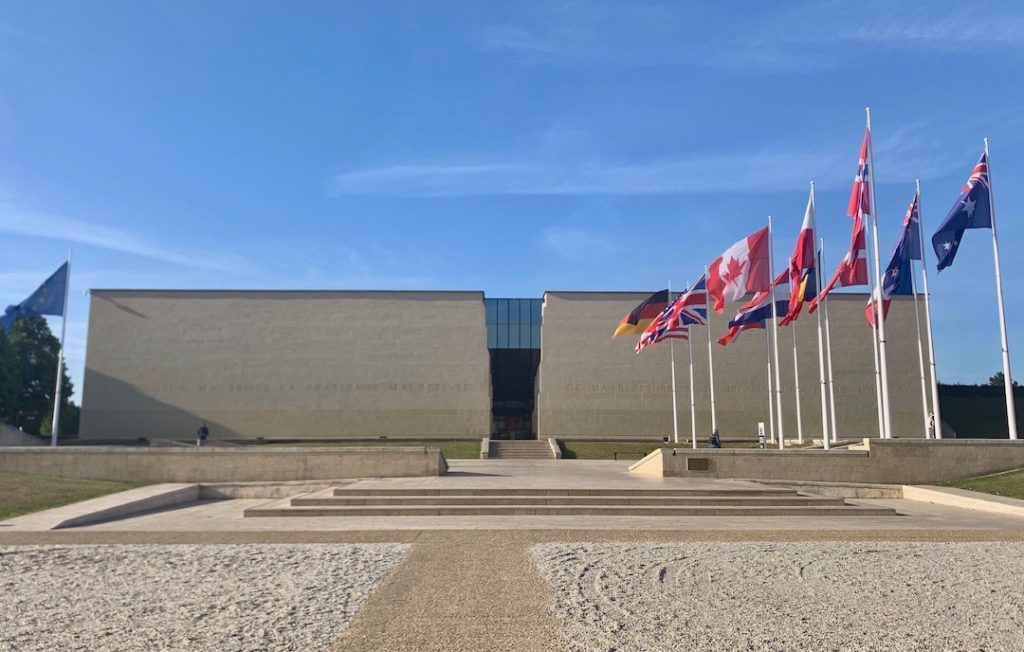
Caen was my first stop because it is the closest town to Bayeux, which was my base location for lodging during my trip. There is a lot to do in Caen. However, since I had only one day to explore, I focused most of my time on a few places, to include the Mémorial de Caen (approx. 20€), L’ Abbaye-Aux-Hommes, and Caen Castle. It is worth spending 2-3 days in Caen if you have extra time. Since the D-Day sites are what brought me to Normandy in the first place, my main priority was to spend as much time as I wanted in the Mémorial de Caen, which is a museum and war memorial commemorating World War II and the Allies battle for Caen.

7 days in Normandy

After about 3 hours in the museum, I caught a bus from right in front of the museum and made my way to the city center. I got off at Caen Castle, which is one of the largest medieval enclosures in Europe and home to the must-see Normandy Museum and Le Musée des Beaux-Arts.

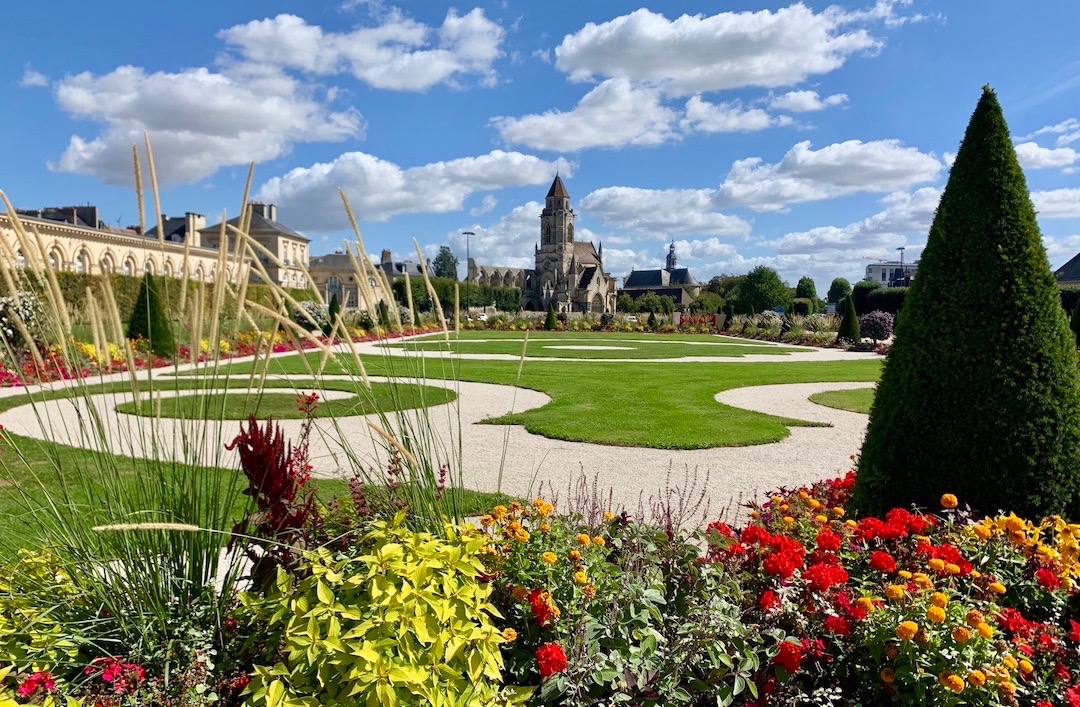
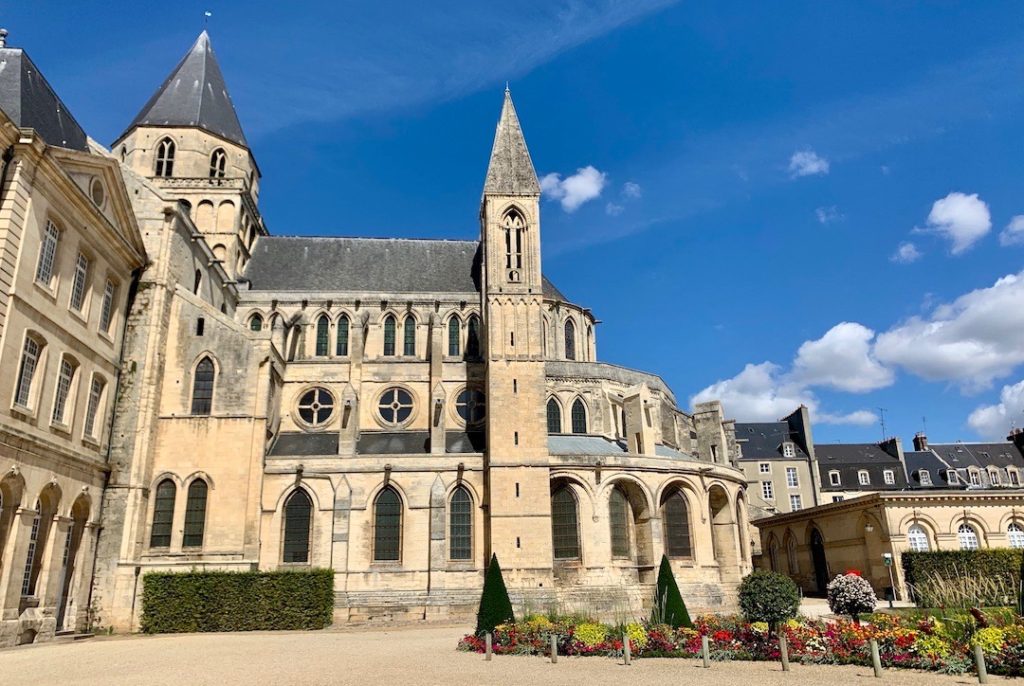
Then I strolled along the Rue Saint-Pierre until I arrived at L’ Abbaye-aux-Hommes, which was consecrated in 1077. Many of the items in the church date back to the XI and XIII centuries. Frankly, I like the outside of the church more than the inside, but it is still worth a visit.

Abbaye-aux-Hommes

Visit Calvados Experience

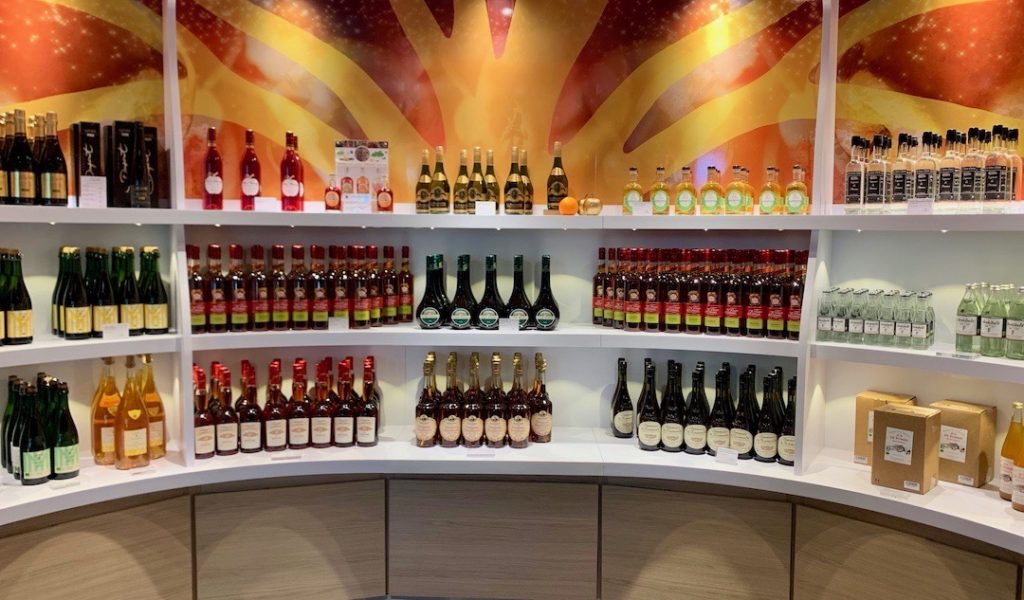
While wine is one of the most popular beverages in most of France, the apple is king in Normandy. Apples are made into cider, an aperitif called pommeau, and apple brandy. You can take a tour to learn about how these delicious products are made and enjoy a tasting at the Calvados Experience.

  • How to get there: The best way to get there is by renting a car and driving. You can also book a tour, but driving gives you the most freedom.
  • Location: About a 40-45 minute drive from the Caen train station.
7 days in normandy

Day 2: Mont-Saint-Michel and Normandy Beaches

Mont-Saint-Michel

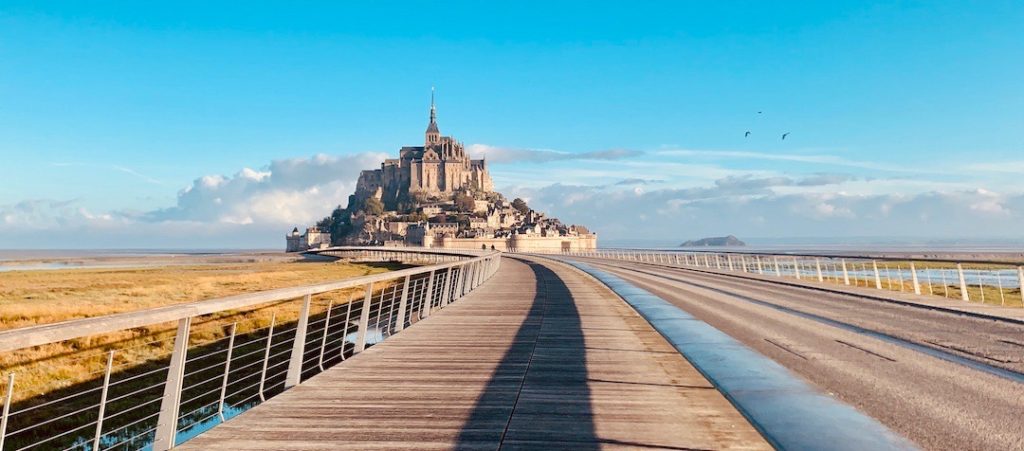
Mont-Saint-Michel is a magical place. From far away it looks like something you would see in a Disney movie. Depending on the time of day and tide, it becomes an island. Definitely a gem of Normandy. It is about a 2 hour drive from Paris and Caen. You could also join a tour group from Paris to Mont-Saint-Michel, but you will have more flexibility and the opportunity to beat the tour buses and crowds if you drive. Make sure you visit the beautiful gothic Abbey. I find the food on the island to be a tad expensive, but people say you must stop by La Mère Poulard for their infamous omelet. It will cost you more than $40. Make reservations if you want to indulge yourself.

  • Tip: Mont-Saint-Michel is very hilly. Make sure you wear comfortable shoes. Also, the weather can change without warning. Dress in layers and take a rain jacket just in case.
  • Tip: Make sure to check the tide tables before your trip. There are times when the island is inaccessible due to high tide.
bucket list: 7 days in normandy_mont-saint-michel
Sainte-Mère-Église

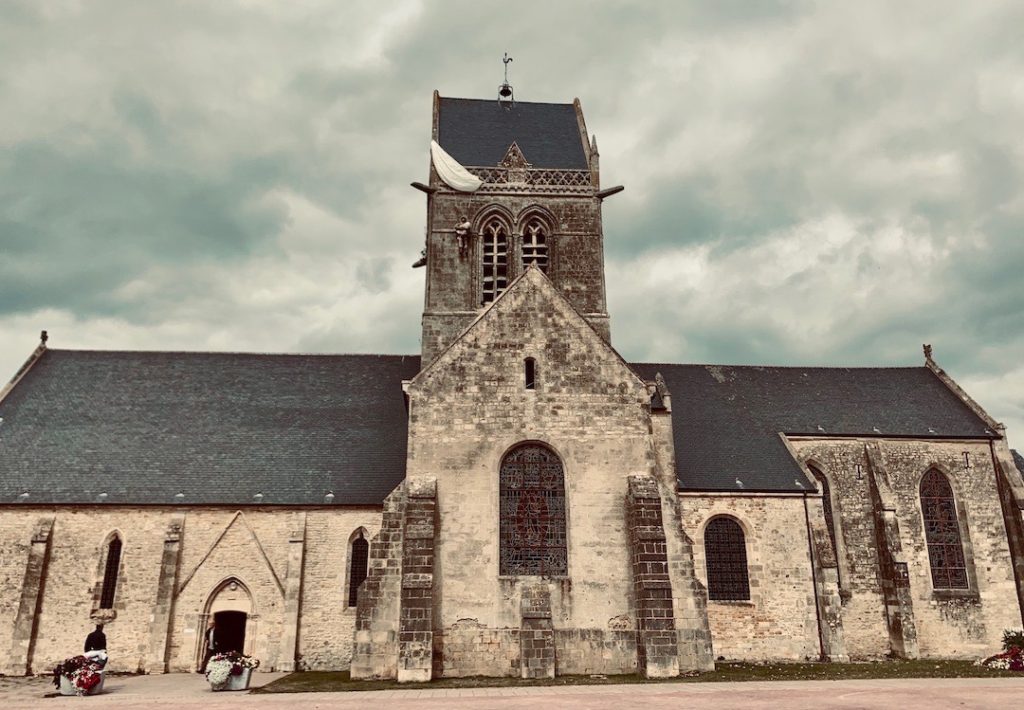
I started my tour of D-Day beach sites by visiting Sainte-Mère-Église. It is a commune in Normandy that was the first Frenchtown of Cotentin that American paratroopers liberated on D-Day. If you look up at the church, there is a dummy paratrooper hanging from the church steeple in remembrance of John Steele. He spent two and a half hours hanging from the steeple while playing dead to keep German soldiers from capturing him.

Directly across from the church is the Musée Airborne. It does a great job paying homage to the paratroopers who risked their lives in the early morning hours of D-Day. Before you leave this cute town, take some time to grab a cup of coffee, crepe or a light snack and walk around to the shops.

7 Days in Normandy

Utah Beach

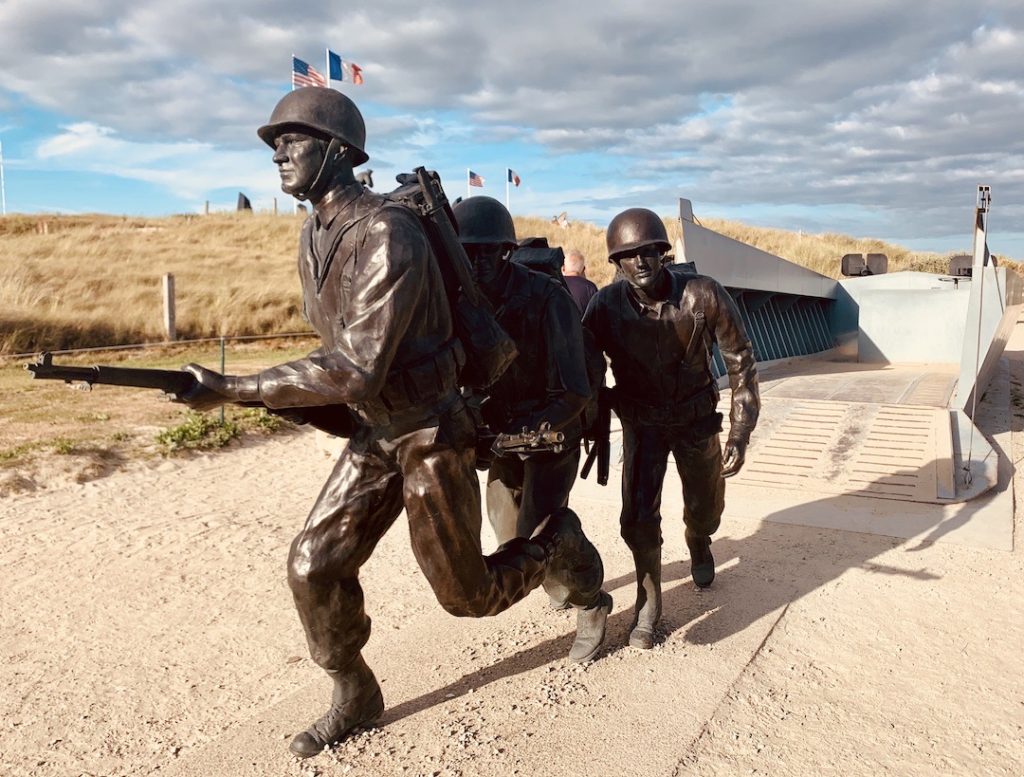
Utah Beach was the first D-Day beach that I visited on my trip to the Normandy region. My first stop was the museum at the beach site. It is very well done and depicts what happened in the lead up to D-Day. It is one of the most important sites of the commemoration of the battle which marked the beginning of Western Europe’s liberation. There are more than 2,000 artifacts in the museum. As for the beach, the monuments on or near the beach provide a reminder of the brave men who in the early morning of 6 June 1944 and risked their lives to begin the journey to liberate France.

Normandy

Day 3: Normandy D-Day Beaches

Since I started with Utah beach, I decided to tackle the rest of the D-Day beach sites mostly from west to east. I mostly wanted to start from the furthest destination from my lodging and work my way back home. My tour was not comprehensive of all of the D-Day sites because I did not have enough time. I think you need a full week or more dedicated to the sites to see everything. It was important for me to see as much of the region as possible so I hit many of the American highlights plus one German cemetery.

Pointe du Hoc

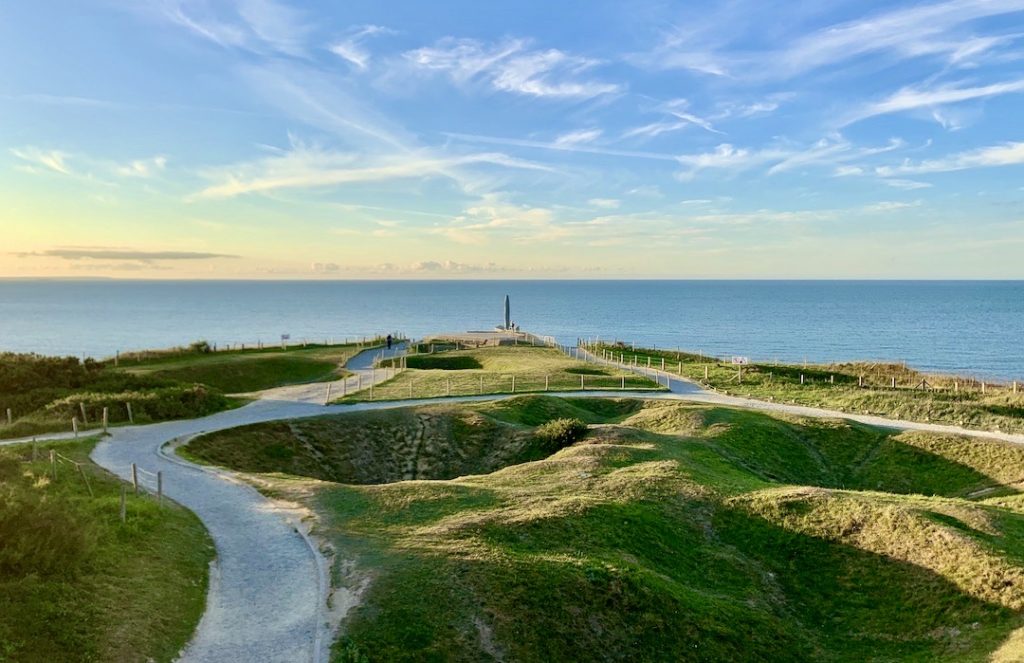
Pointe du Hoc has these beautiful cliffs right on the Atlantic Ocean. It was one of my favorite D-Day Normandy beach sites that I visited during my trip. The Germans heavily fortified the entire area as it built up its Atlantic Wall in anticipation of an Allied invasion. At the time, German guns could reach Allied ships at Omaha and Utah Beaches. In the days ahead of the D-Day assault, Allied bombers struck Pointe du Hoc five times to weaken German defenses. To this day, craters from the bombs are sprinkled throughout the fields.

It’s best to visit on a clear day if possible, so you can enjoy the grounds. I went late in the day around 7pm, which was perfect because there was hardly a soul in sight. The sun was just about to set, making a great backdrop for the cliffs and ocean.

Normandy
Omaha Beach and American Cemetery

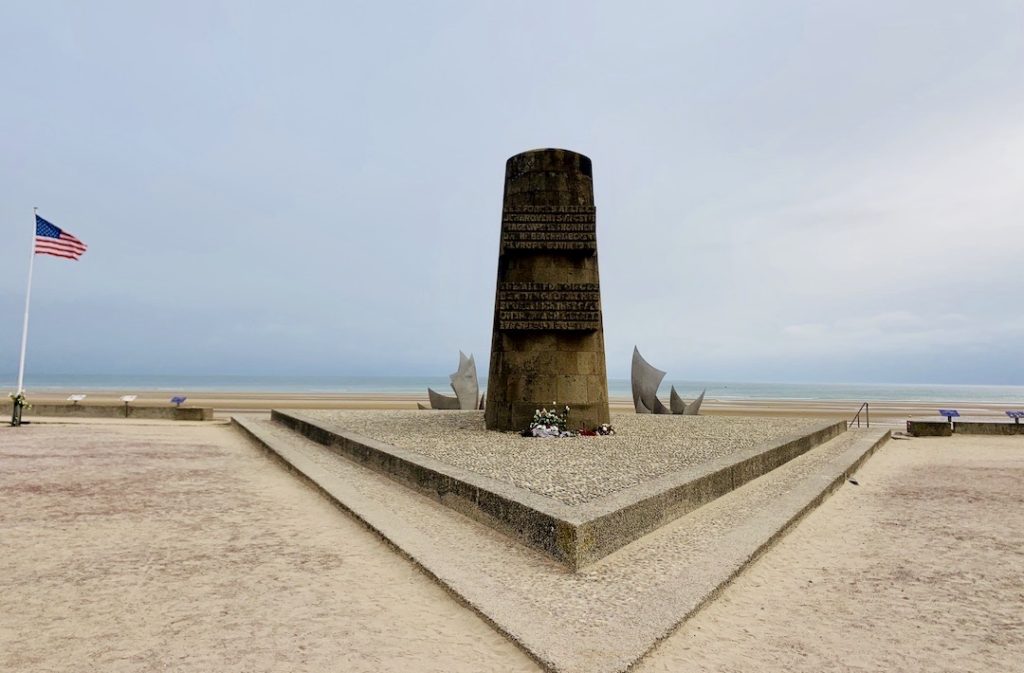
The beach is beautiful. It is hard to imagine what it was like over 75 years ago for American soldiers to storm this beach. The topography at Omaha Beach made it easy for the Germans, who had covered the terrain with machine gun nets, mortars, minefields, and barbed wire, easy to defend. The battle at Omaha was one of the most costly battles in terms of human lives lost on D-Day. It is nicknamed “Blood Omaha” because of the more than 4,000 deaths (American and German). It is nice to visit in the morning when the crowds are low and you can take your time to appreciate what happened on this beach.

Normandy American Cemetery

Your next stop should be the Normandy American Cemetery. It reminds me a lot of Arlington Cemetery in Washington, DC. Allies battled German troops throughout Normandy for three months on their march towards Paris. Many American soldiers who lost their lives during these battles remain buried at the American Cemetery

Normandy 3

Day 4: Normandy D-Day Sites

La Cambe, German Cemetery 

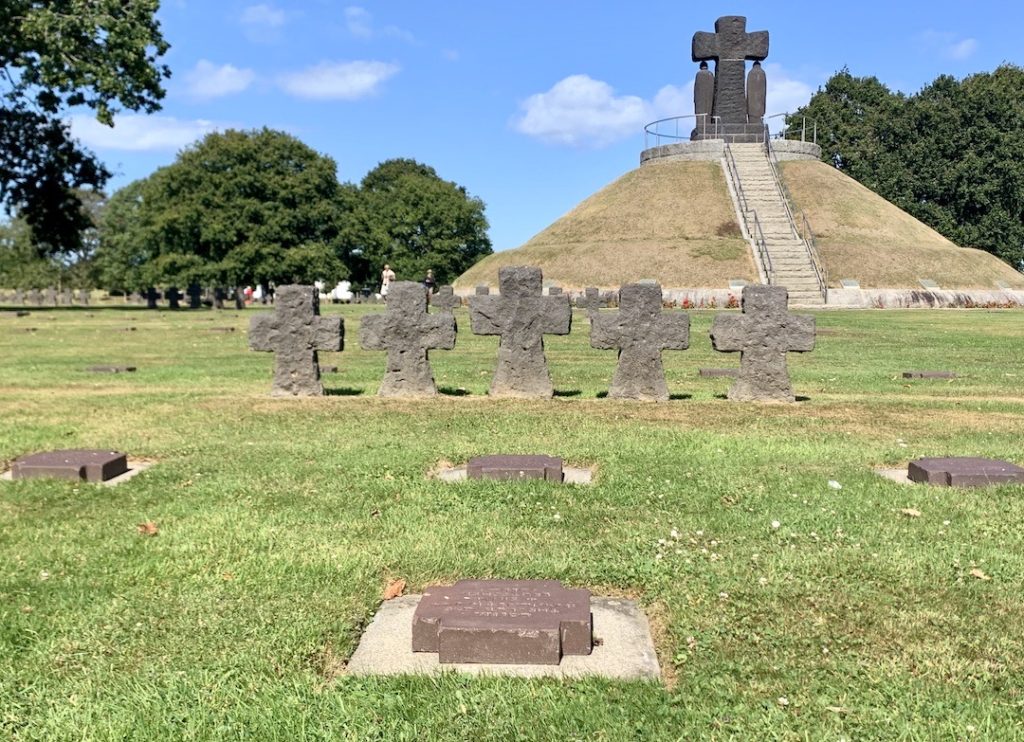
As an American, I did not originally consider going to any German sites, mostly because there are so many American sites to visit. However, I heard that the La Cambe cemetery was unique from the other cemeteries, so I wanted to check it out. I am glad I made the stop. The cemetery was established during the Normandy invasion during which 150,000 Germans were killed, wounded or captured between June and August 1944. The grave site is a lot more minimalist than many of the other sites and the gravestones are flat and shaped like crosses. The most striking aspects are the ages of some of the German soldiers, many of who were teenagers when they lost their lives for the German cause.

Normandy4
Arromanches

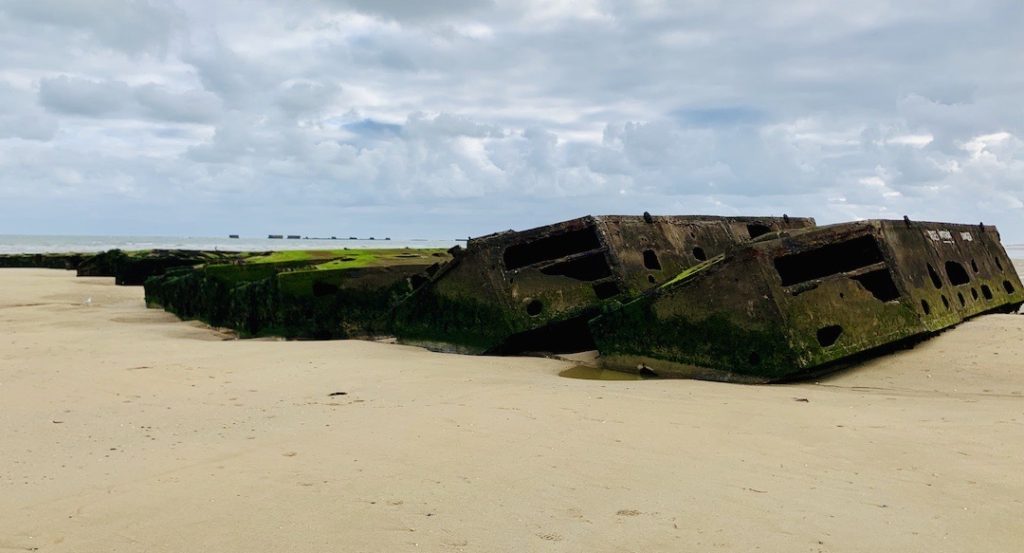
Not a single allied soldier set foot on this beach on D-Day. The assault on Arromanches came overland, not from the sea. What remains at Arromanches is a sign of an amazing challenge. The Allies built an artificial harbor to help supply a continuous flow of men, equipment, and supplies to continue the fight in Europe. This location is super cool and should not be skipped.

Tip: Make sure to check the tide tables. At high tide, it will be impossible to see what remains of the harbor.

Normandy5
Longues-Sur-Mer

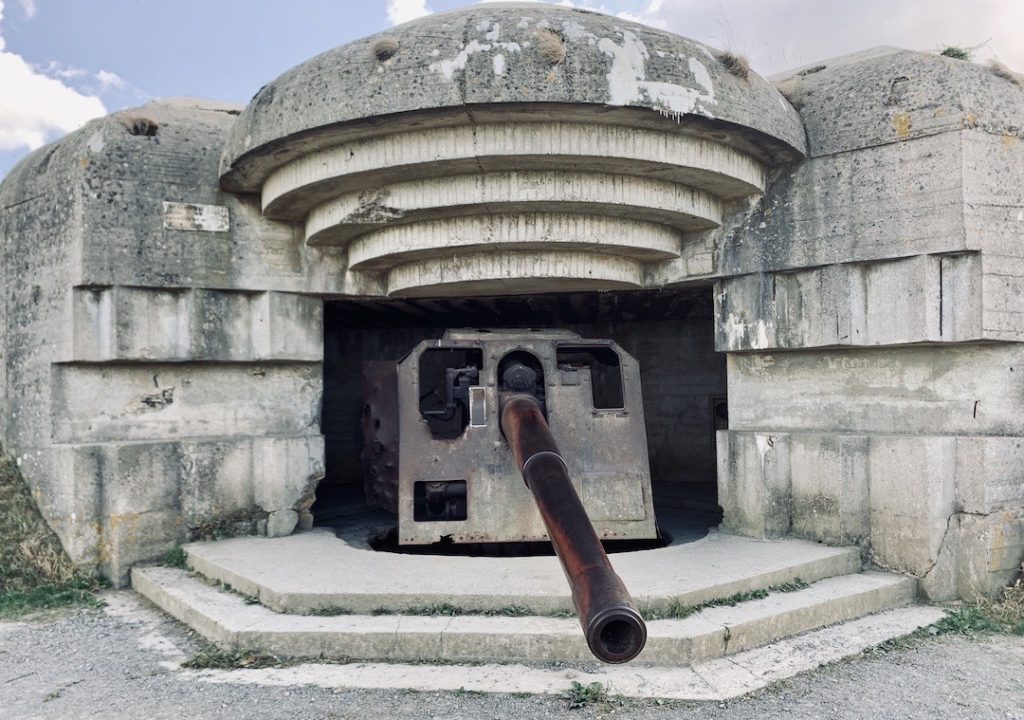
The German battery at Longues-Sur-Mer was home to four 155mm guns protected by bunkers that were about 300 yards back from the shore. The range of the guns was far enough to reach Omaha and Gold beaches, making them a threat to Allied forces on D-Day. This was particularly true since the Longues battery was still operational on the morning of D-Day. I almost skipped out on visiting this site, but I am glad I stopped, especially since it is the only heavy battery left in the region that still has its guns.

normandy 6

Day 5: Honfleur

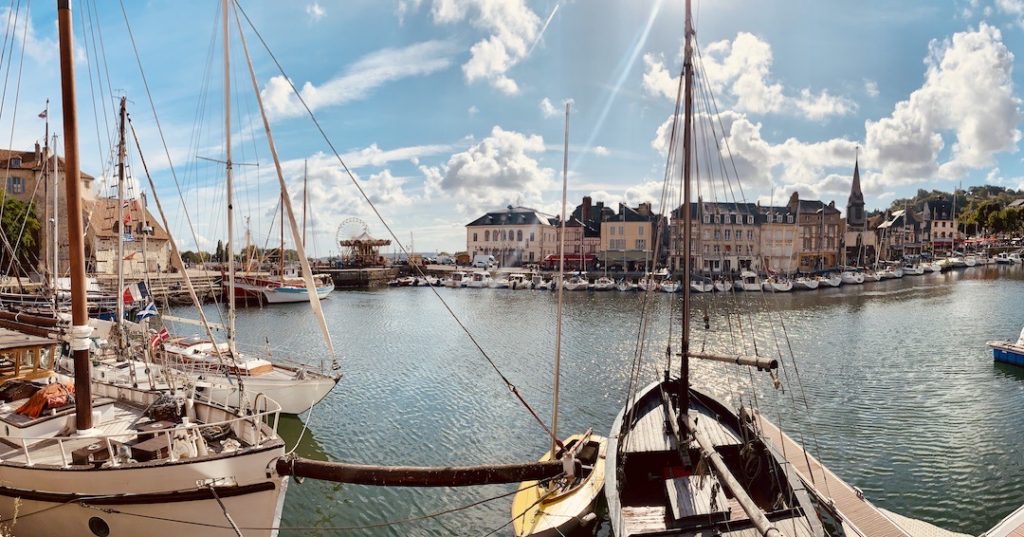
Honfleur is a port city in the Normandy region that has a very old town vibe. It has a picturesque port that is adorned with cafes, restaurants and shops. I think it is slightly more touristy than some of the other small towns in the region. It is even busy in early September when vacation season is over and the kids have returned to school. Outside of its beautiful vibe, the main draw to this city is the Sainte Catherine’s Church, the Museé Egène Boudin. The village is a series of winding streets that carry you between wooden houses and several shops selling Normandy treats.

Tip: There is no direct train service to Honfleur. From Paris, you can take the train from Gare St.-Lazare to Deauville. Bus number 20 will take you to Honfleur. Another option is to take a two hour bus from Caen. My recommendation is that you rent a car and drive!

Normandy

Day 6: Fécamp and Étretat

Fécamp and Étretat are beautiful coastal towns in the northwestern part of France’s Normandy region that you can visit in one day. I would first stop in Fécamp to get your first look at the white cliffs that adorn parts of northern France. While you are in Fécamp, make sure to do a tour of the Bénédictine Palace where you will learn about the palace, sip bénédictine, and enjoy the Tasting Room, Tea Room and shop.

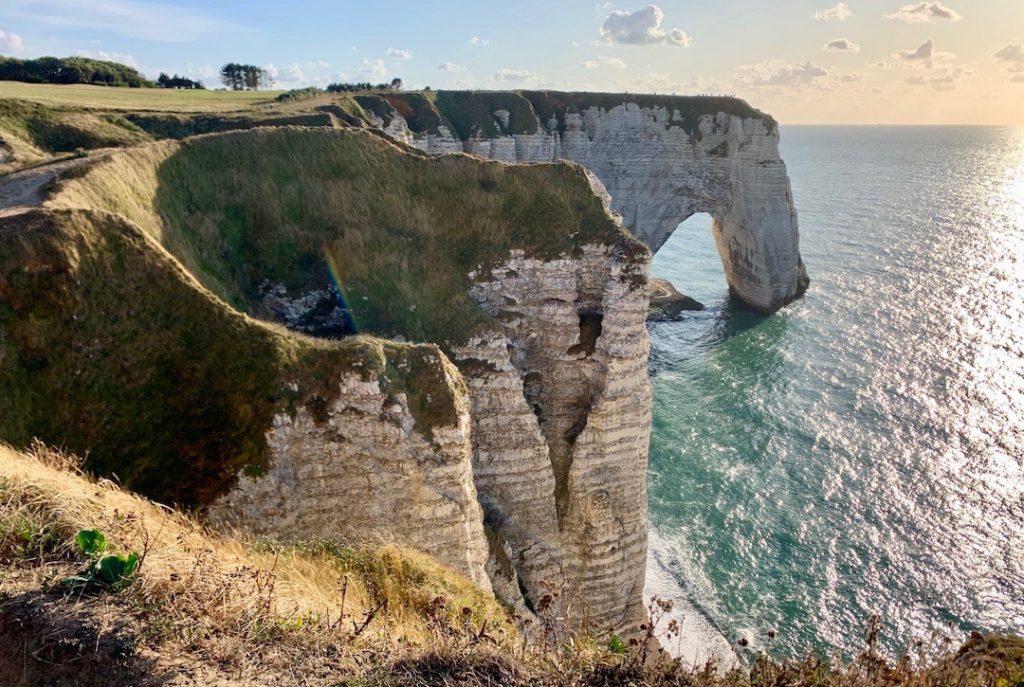
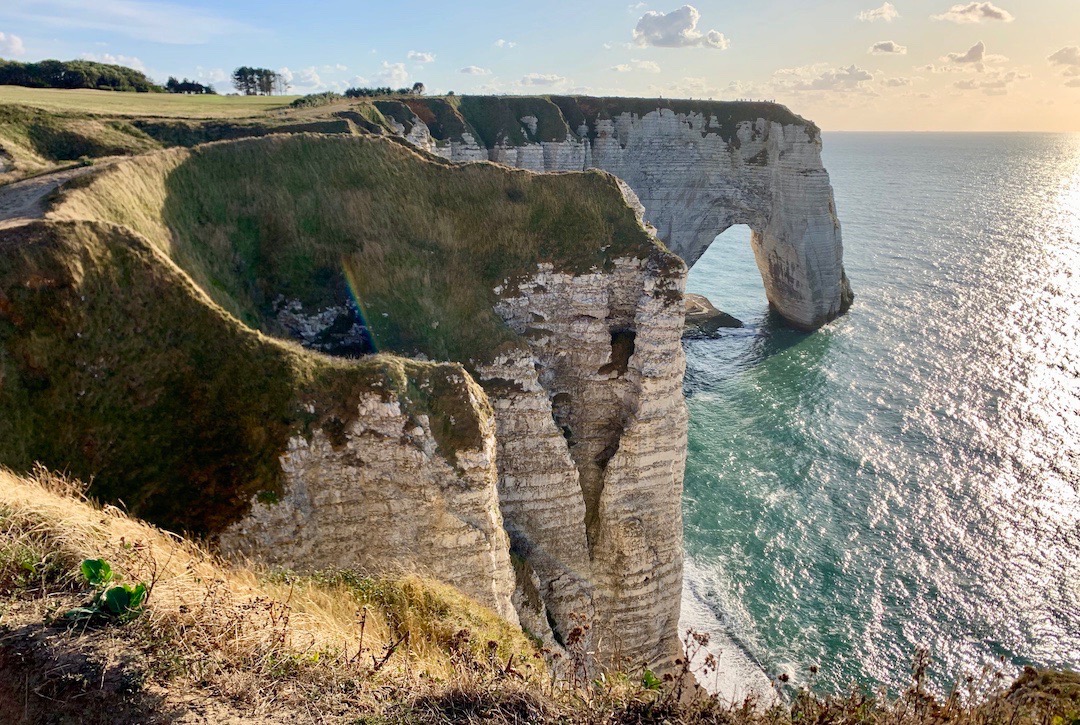
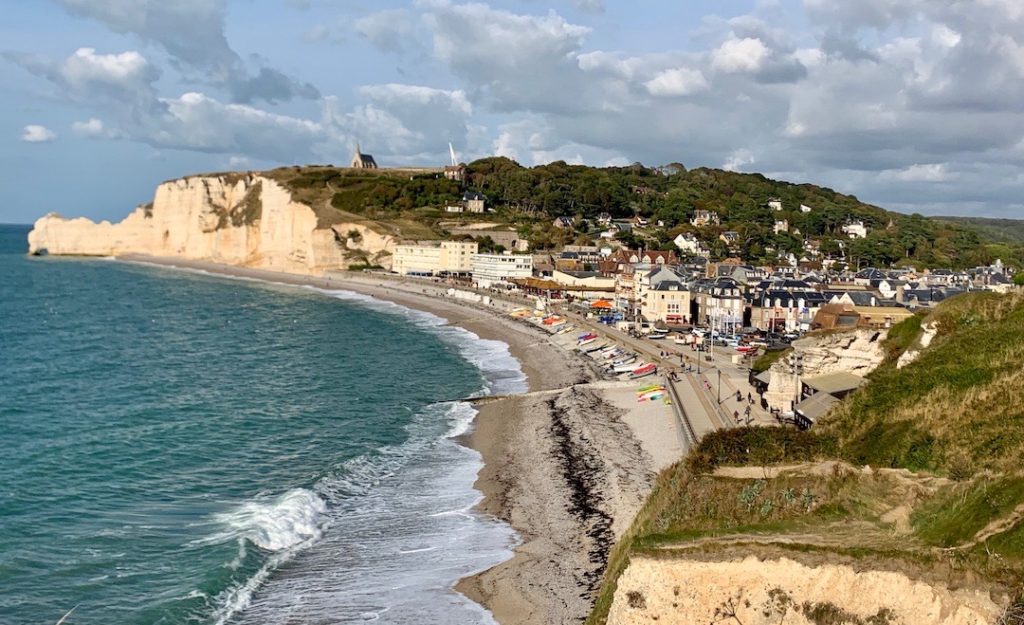
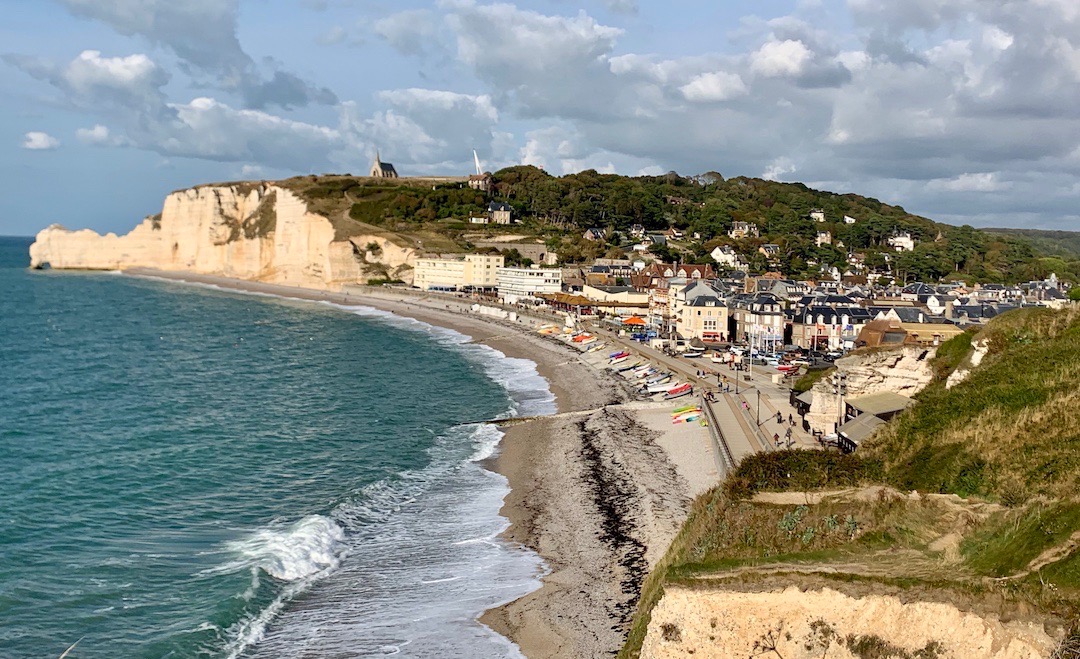
Étretat is less than a half-hour drive from Fécamp and was one of the most beautiful places I have ever traveled to. I have said that about a lot of places, but Étretat is definitely at the top of the list. It is known for its chalk cliffs and 3 natural arches. The area’s beauty drew several artists to its shores, like Eugène Boudin, Gustave Courbet, and Claude Monet. The three sites I would focus on are Les Jardins d’Étretat, Falaise d’Amont, and Falaise d’Étretat.

Etretat Normandy

Étretat 

Day 7: Normandy’s Cheese and Caramel

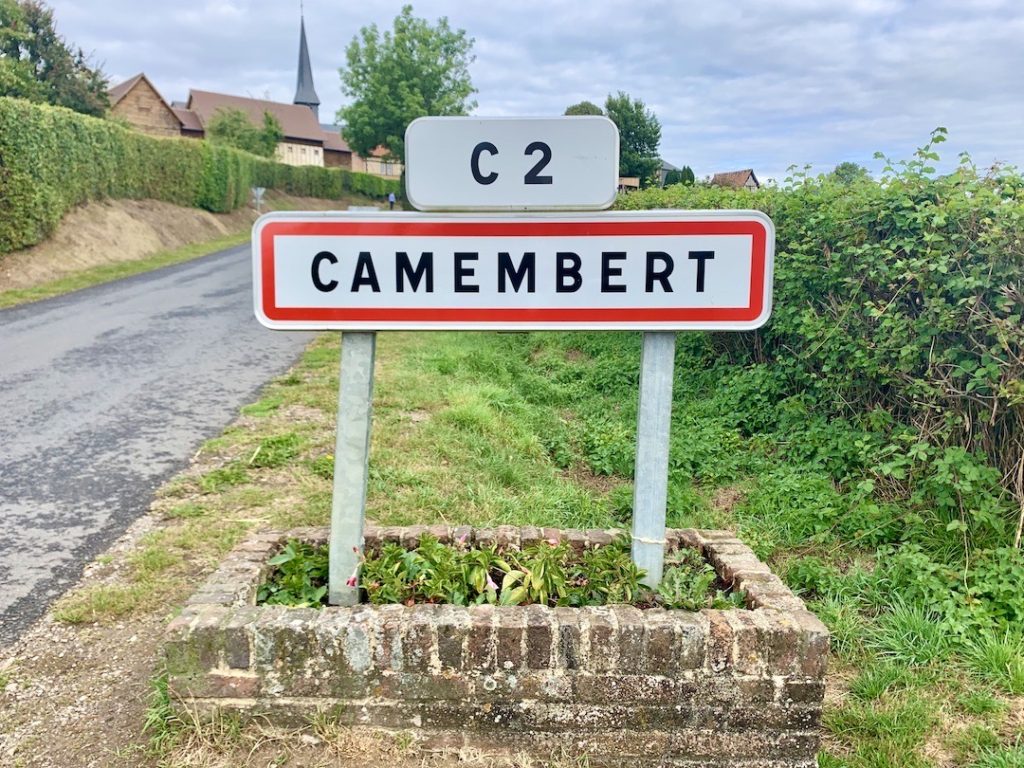
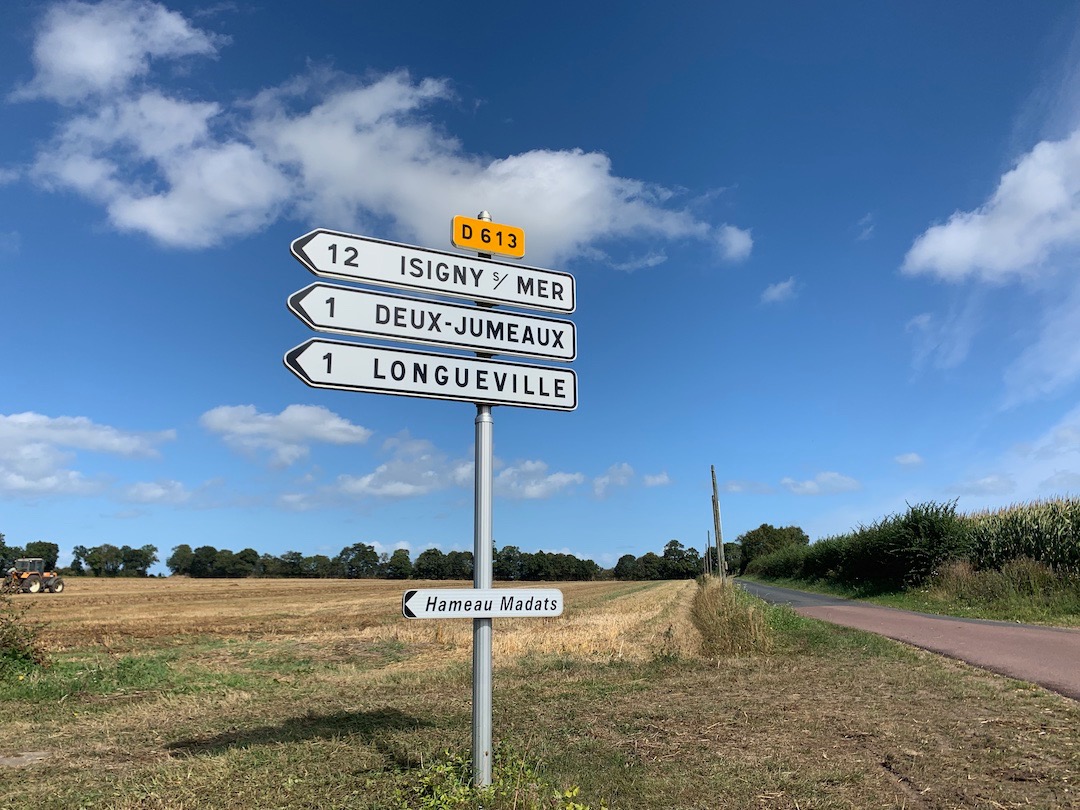
You cannot leave Normandy without indulging in some of the region’s treats. Normandy’s cows, bred in the Pay d’Auge region, make some of the best milk that is rich in proteins. That delicious milk is used to create Normandy cream and butter that is used in the region’s four most famous cheeses; Camembert du Normandie, Livarot, Pont-L’Évêque, and Neufchatel. I did a tour at La Masion du Camembert. The tour and cheese tasting was a little underwhelming, but I still think it is worth checking out.

Normandy

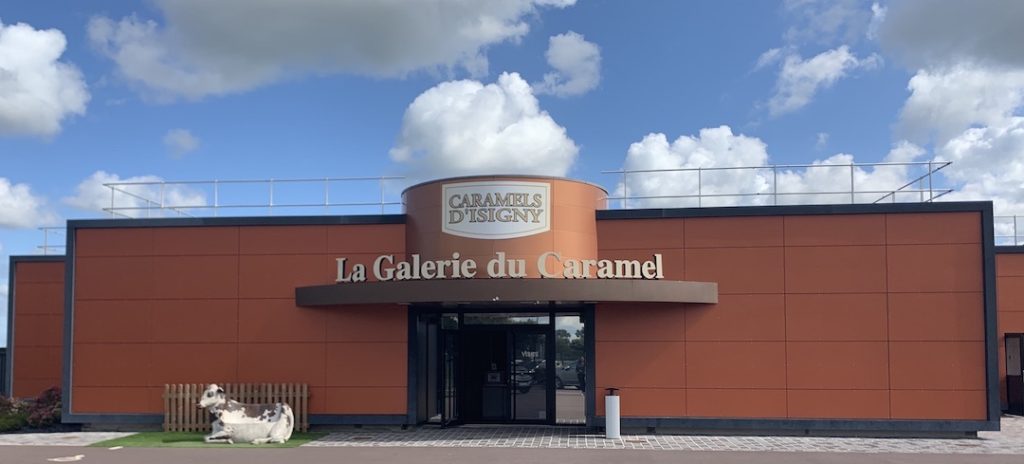
Once you have filled your belly with cheese, head over to Isigny-sur-mer and stop by Caramels D’Isigny to taste some of the best caramel you will ever eat. They offer a tour of how they make their delicious treats. There is a shop on the premises that sells three types of caramel; tender, slightly sticky or fondant (not sticky), as well as caramel popcorn, ice cream, crepe and waffle toppings, and lots of other goodies.

normandy

Tips for Driving in France

Driving in France

I rarely drive whenever visiting another country. As a matter of fact, I’ve only driven in Kenya and France. I can be quite an aggressive driver but it also stresses me out. I prefer to sit back on a tour bus, train, or metro to get me where I need to go. It takes the stress out of travel. I definitely do not want to drive in crowded, traffic heavy cities, where you spend most of your days getting from place to place. However, there are certain locations where I think it is way worth it to drive, and the countryside of France is one of those places.

As an American driving in France, my first question was which side of the road do they drive in in France. I spent two years driving on the left side of the road in Kenya. While I eventually got use to it, picking up that skill again, while on vacation, is not what I wanted to do. Thankfully, the French drive on the right side of the road.

I do not think I would ever attempt to driving in Paris or even parts of southern France where the cities are much more walkable and public transportation is readily available. However, in the countryside, renting a car is a must if you want the freedom to see the best sites. It was at the forefront of my mind as I planned my trip to France. I found that having a car gave me so much freedom. I never felt rushed and I was able to enjoy everything exactly the way I wanted to. As you prepare for your adventures, here are a few tips for driving in France.

Renting a Car

Renting a car in France is fairly simple and straight forward. Several US companies, such as Enterprise, Sixt, and Hertz will allow you to easily book rental car reservations in France. You should reserve your vehicle well in advance, especially if you want an automatic car. Rental car companies in Europe have more manual vehicles on hand, so reserving early will ensure that you get what you want.

Make sure you get the insurance that comes with the vehicle. So much can go wrong while driving in an unfamiliar location, so it is better to be safe than sorry. I also got supplemental insurance to cover the windshield and tires. Apparently it would have cost me between several hundreds to $1,000 to fix either of those things if they were damaged. You can drive in France with a US license, but I also got an international driver’s license from AAA before my trip just in case I needed it. However, no one ever asked to see it.

Getting around

A lot of newer cars have navigation systems built into the vehicle, but they do not always accurately identify locations. I used Google Maps and Apple Maps for the majority of my trip on my iPhone. They worked perfectly and regularly gave me multiple route options to get to my destinations.

On the road

I found road and traffic signs in France pretty easy to follow and I was never really confused about what I should be doing. However, I also think generally followed what I saw other people doing. Some things to note.

Roundabouts: There are a lot of roundabouts, particularly in the countryside. They sometimes pop up out of no where. I think it is pretty easy to figure out who has the right away, but I did sometimes hesitate if I felt like other drivers were being a tad aggressive.

Traffic lights: Traffic lights are generally on the right side of the road instead of hanging overhead like in the United States. I note this, because I tend to pull all the way up to the line when I stop at a light. However, if you do this in France, you may be slightly past the light and will be unable to tell when it changes to green.

Slow drivers: Slow drivers should stay to the right. Once upon a time, slow drivers drove in the right lane in the United States. Not anymore! However, in France, the left lane on the highway it strictly used for passing. It is normal to see drivers moving back and forth from the right lane to the left as they hop around slower drivers.

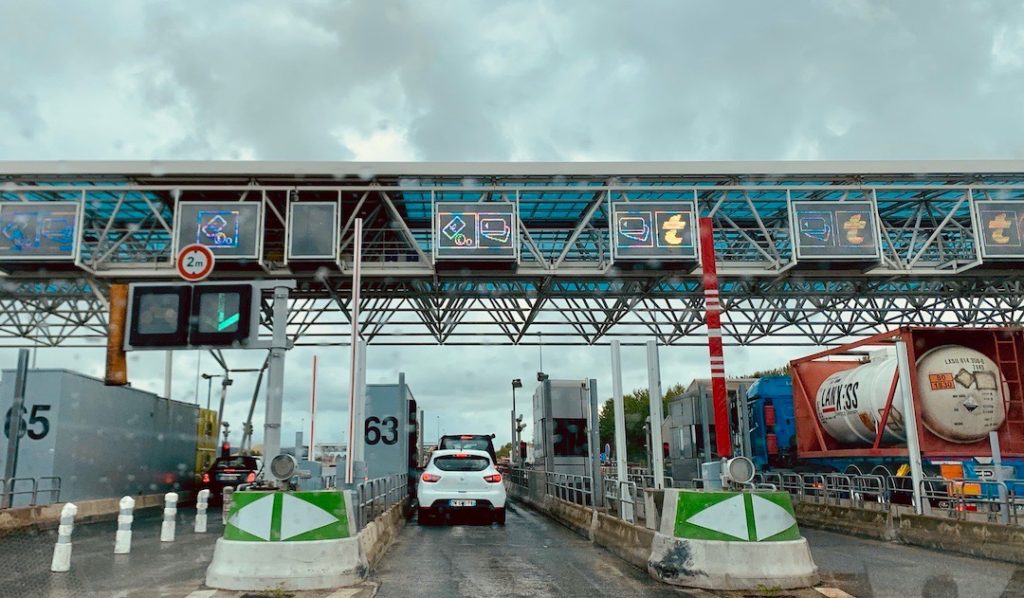
Tolls: I think toll booths are impossible to avoid if you are on the highways in France. However, they are super easy to get through. No cash? No worries. Toll booths accept credit cards. You can insert your card and be on your way in less than 30 seconds. They are not that expensive. However, depending on the duration of your trip, you may go through several toll booths, adding to the cost.

driving tips for france

Speeding: One of the best tips for driving in France is to watch your speed. I received a ticket during my last trip to France, caught by a speed camera, which is the easiest way to get caught on the road. Apparently there are warnings that the cameras are coming. If you do not know what to look out for though, those warnings can be easy to miss. I did not see too many cops while I was there, but they are there, hiding around behind bushes!

Tickets are relatively cheap compared to what you would pay in the US. If you are driving a rental car, the rental company will let you know via email that the car was caught by a speed camera. Then, they will charge your credit card accordingly. You may also receive an Avis de Contravention, which is a notice that you need to pay your ticket, in the mail from the French government.

Tip: Speed limits change rapidly in the countryside with little warning. If you are approaching a small town, you should assume that you will have to lower your speed by 20-30 kilometers.

Parking: Tips on driving in France must include parking. There are very few free places to park. It is usually easier to just pay for parking than circling neighborhoods looking for a free spot. I ended up downloading two parking apps; whoosh and pay by phone to make parking easier. Parking is not crazy expensive, and paying for parking ends up being way less stressful.

Filling up the tank: My final tips for driving in France is less of a tip and more of a warning. Gas is expensive! In late summer 2019, it cost me $20-30 more to fill up my tank in France than in the US. I found the cheapest gas station I could find near my lodging. I only used that station for the duration of my trip. Note that most gas stations will put a hold on your credit card for $120-130 no matter how much it actually cost to fill up your tank. The gas station usually lifts the hold in 1-3 days. If you cannot manage the hit to your credit card each time, then I recommend paying in cash.

Thailand: 15 Things You Must Do

things you must do in Thailand

Thailand was the first Asian country that I visited. It is such a beautiful, interesting place that even after almost two weeks of travel, I felt like I had just begun to discover the country’s gems. I did try to squeeze in as many of the highlights as possible. Here are what I think are the 15 things you must do in Thailand.


See Bangkok’s sites

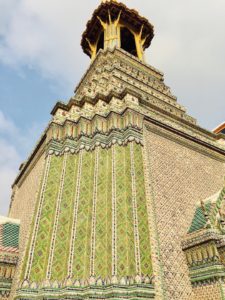
Bangkok is one of the busiest cities in Thailand. I think the best way to get around to see the major sites is to join a tour group. I use Viator.com to see places, such as the Grand Palace, Temple of Emerald Buddha (reclining Buddha), and Wat Arun Ratchavararam. If you prefer to see these sites on your own, it is doable, but I recommend that you take time to plan how you will get around the city.

Thailand must do 5

Do a bike tour of Bangkok

I did a few bike tours in Thailand, but rolling around the streets of Bangkok was my favorite. I enjoyed my 3-4 hour bike tour around Bangkok, where you can visit a lot of the local, less touristy sites. During our ride, we visited the flower market and China Town. We even stopped by a lovely bug snack stand. Yes, you read right! The bug snack stand had lots of options. Unlike most of the other people in the group, I did not have the guts to try them.

Watch a Muay Thai fight

Muay Thai or Thai boxing is a full contact sport that is Thailand’s national sport. The best fights are in Bangkok at Lumpinee Stadium.

Eat street food

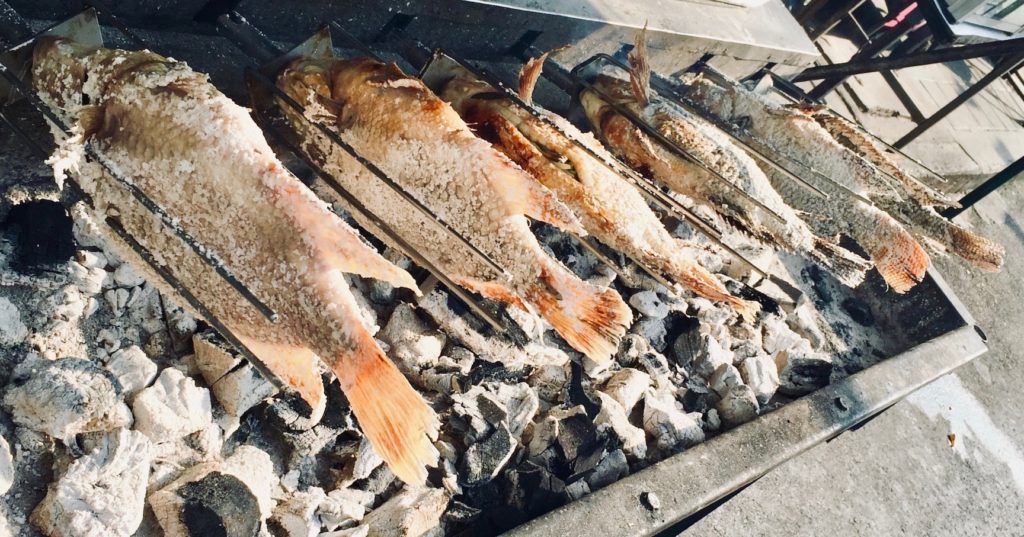
Thailand has some of the best street food in the world. In Bangkok, you can find street food, such as Pad Thai, fish cakes, fried veggies, and whole fish throughout the city. The food is usually very fresh, often times made right in front of you.

Thailand Food Tour

Take a cooking class

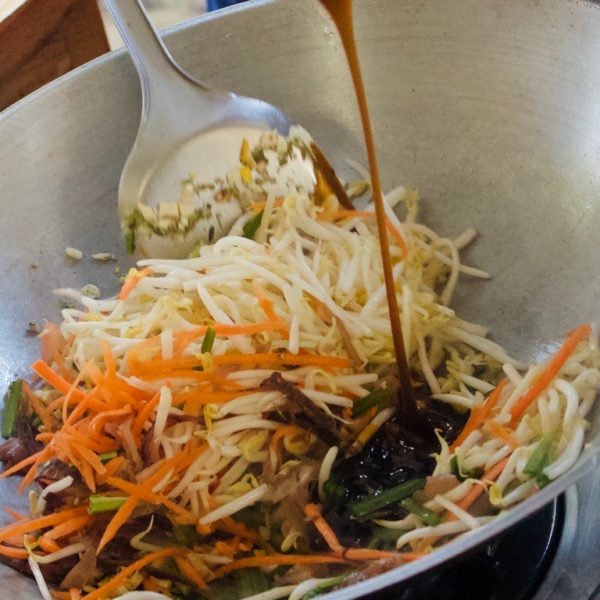
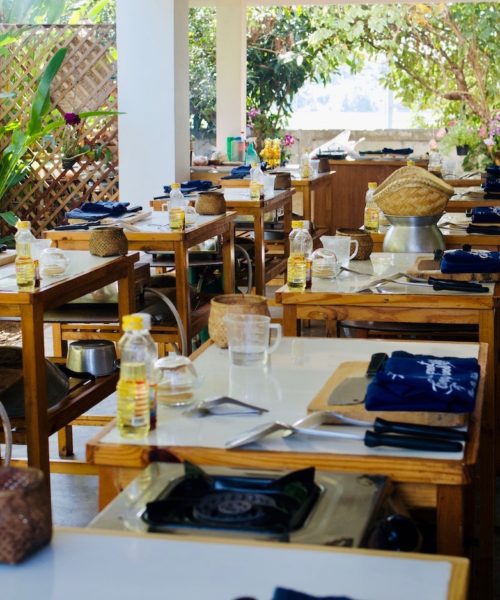
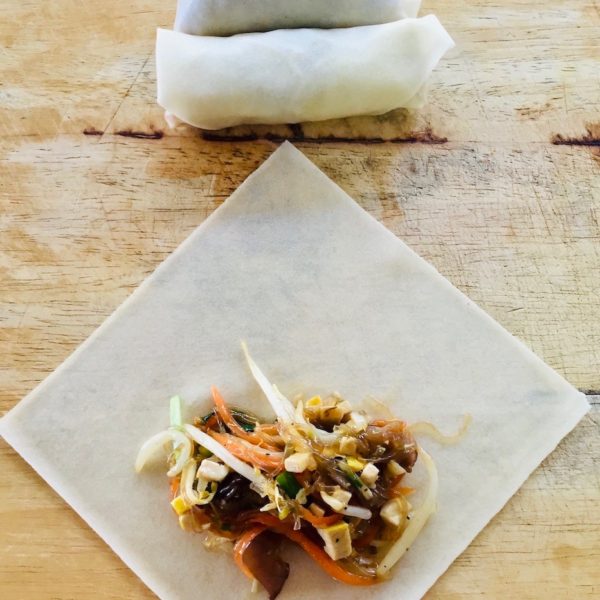
I love Thai food and I am always trying to replicate my favorite dishes at home. As a result, I was on the hunt for a good place to learn how to make Thai dishes. There are many cooking schools throughout Thailand and most of them are very affordable. I prefer schools that have their own farm and grow fresh veggies to use in the cuisine. I took my class in Chiang Mai at the Thai Secret Cooking School.  During an 8 hour course, the instructors demoed every course we made. Then, we made several dishes from scratch, to include curry paste that we used to make a delicious green curry. Many of the ingredients came directly from the school’s organic garden. The school provided us a cookbook with all of the dishes we prepared during the course.

Thailand must do 2
thailand must do 3
thailand must do 4

Do a food tour

Thailand was the first country where I did a food tour. It was such a positive experience that I now do food tours in most countries I travel to. The benefit is that you will go to mom and pop restaurants that have been family owned for generations and taste things you might not otherwise come across.

Get outside of Bangkok

I love the fast-paced nature of Bangkok, with its beautiful temples framing the city’s backdrop. However, there are so many diverse things to see in Thailand. The beautiful mountainous regions in the north that are touched by Chinese influence is something you should not miss. The beaches and islands are some of the best and most beautiful in the world.

Visit Chiang Mai

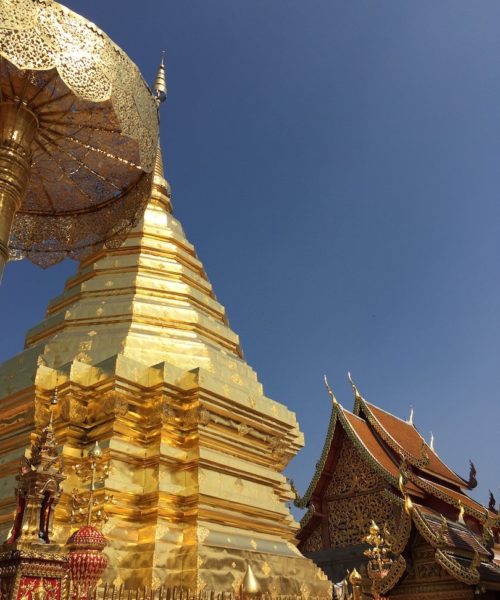
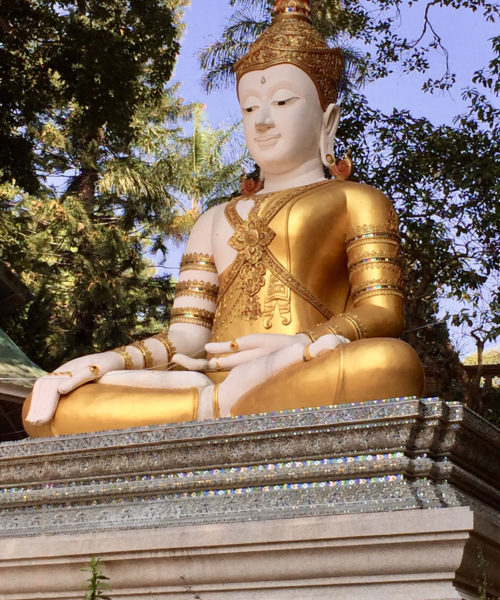
Chiang Mai is part of the mountainous region of Thailand in the northern part of the country. Cooler temperatures and green landscape will make you feel more relaxed than spending time in Bangkok. It is home to numerous temples, to include the must see Wat Phrathat Doi Suthep. I used Chiang Mai as a base city, to enjoy other parts of the region.

Thailand must do

Wat Phrathat Doi Suthep

Thailand must do

Wat Phrathat Doi Suthep

Get a massage

In Thailand, it’s a must to get a Thai massage. Well, sort of. I definitely wanted to get a massage in Thailand, but I opted out of the “Thai” part of it. I enjoyed my massage at Peak Spa in Chiang Mai, where I had a body wrap, a 60-minute massage, and a milk bath. It was all fantastic. The one difference is that the massage is literally a FULL body massage. Your bottom and breasts will definitely get a rub down. I was a little taken aback at first, but once I relaxed, I fully enjoyed it.

Get a fish pedicure

What in the world is a fish pedicure? That is the question I asked the first time someone recommended that get one. A fish pedicure is when you put your feet into a tank of warm water filled with garra rufa fish. They swim around the tank and eat the dead skin off of feet, leaving them callous free. Now, this practice is banned in some US states and other parts of the world because it is considered cruel to animals. I did not get one done because it just seemed weird, but many people enjoy it.

Khantoke dinner and Dance

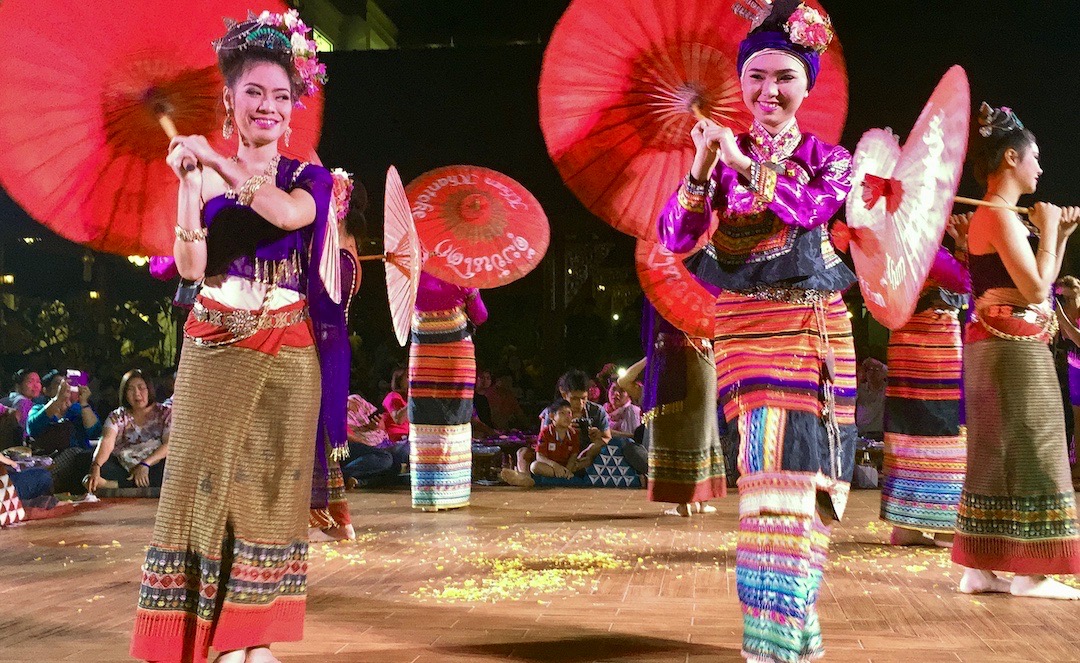
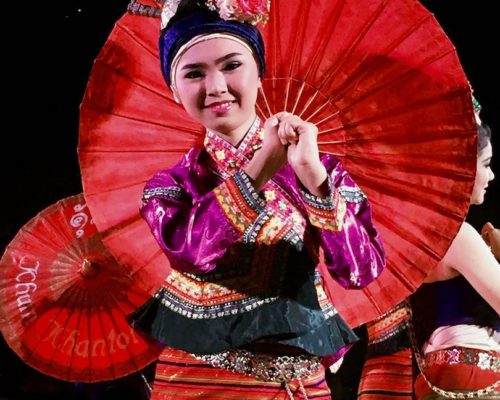
I went to a Khantoke dinner and dance at the Old Chiang Mai Cultural Center, which was created in 1970 to showcase Northern Thailand culture. The dance and performances are based on long-standing traditions.  You will sit on bamboo mats on the floor and will be served a large amount of northern Thai food. I was on this trip by myself, so I definitely could not eat everything they served me. The meal was quite good though. While you enjoy dinner, there will be a variety of traditional Thai dances on stage, a sword dance and a drum performance. You can book a tour on Viator.com, which includes transportation.

thailand must do

Visit the elephants

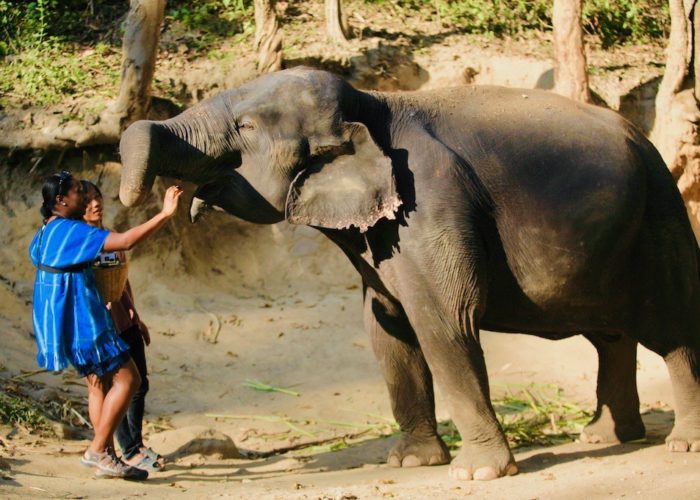
I love elephants! They have so much personality. You can have an up-close and personal experience with them in Thailand. There is a lot of controversy over whether or not people should ride elephants, especially with harnesses and carriages strapped onto the elephants’ backs. However, there are companies that try to focus on the humane treatment and care of elephants. I visited Elephant Nature Park on the outskirts of Chiang Mai where I learned about how to monitor the health of the elephants, fed and bathed them, and then did a short bareback ride on the elephant.

Thailand must do
Thailand must do
Thailand must do

Check out Thailand’s islands

Most people think of Phuket or Krabi when considering beach locations in Thailand. However, I think it is worth staying on one of Thailand’s many islands instead. I traveled to Ko Lanta, where it is quieter and more relaxing than the touristy spots.

Island hop

With more than 300 islands in Thailand, if you are staying on the coast or on one of the islands, you should definitely island hop. There are four island tours from Krabi, Thailand as well as several options to visit some infamous sites like Ko Mook Emerald Caves and Phi Phi island.

Go scuba diving

Scuba diving was one of the items on my bucket list to check off during my trip to Thailand. The water and marine life are some of the most beautiful in the world. Also, Thailand’s dive schools are PADI certified, so I felt like I was going to be in good hands. If you have checked out my bucket list, then you will know that scuba diving was on my adventure list. I thought the experience was amazing, but I’m not sure I can stomach doing it again. Regardless of my fears, I still thought it was well worth it. If you are an experienced diver or just like the occasional plunge, Thailand is ranked high on scuba divers’ list.

Reviews: Brussels Airlines Business Class

Brussels and Egypt Air reviews

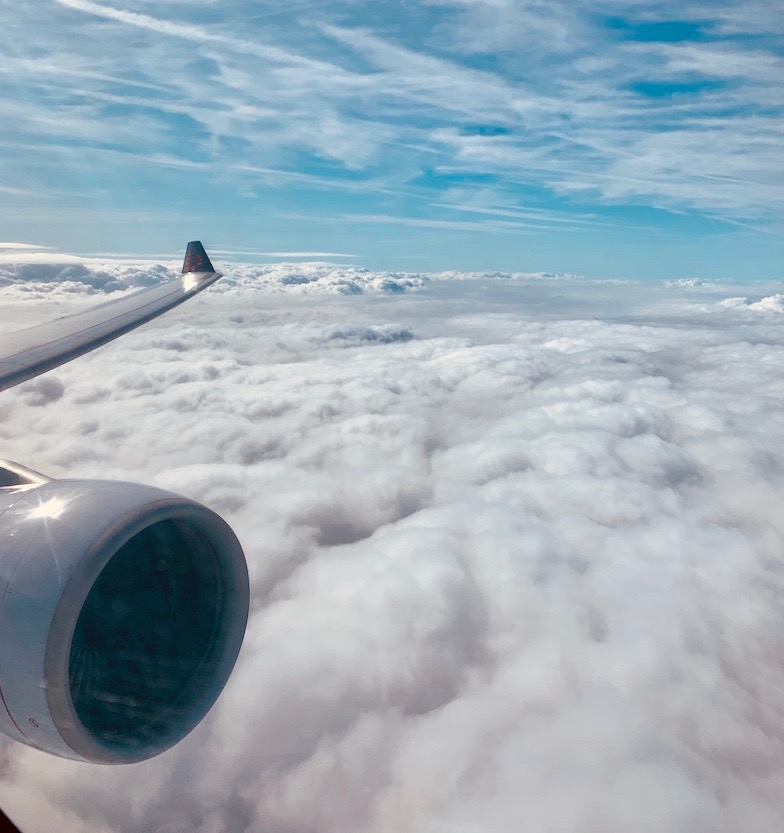
On a recent return trip from Belgium, I noticed that the flight was going to be quite full. Out of curiosity, I asked the lovely people at the counter if there was still room in business class. Luck would have it, there were plenty of seats available. Even better, Brussels Airlines was running a very discounted special on upgrades. With such an opportunity, I wanted to share my reviews on the Brussels Airlines business class flight from Brussels to Washington Dulles Airport.

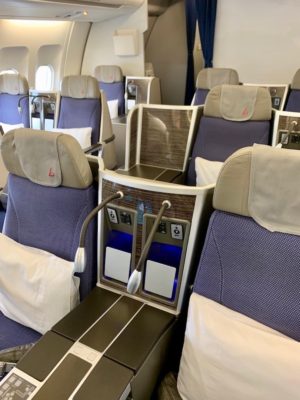
The cabin was fairly modern that alternated between double and single seats along the windows and double seats down the middle of the plane. We received the customary comfort toiletry kit, a bottle of water, and a choice of champagne, orange juice, or water. There were pillows but no blankets on our seats. However, blankets were provided upon request.

Brussels Airline Reviews

Brussels Airlines never has had a great movie selection and I generally end up reading a book or watching TV shows I downloaded onto my iPad. They only have a few recently released movies and not even a good selection of classic movies.

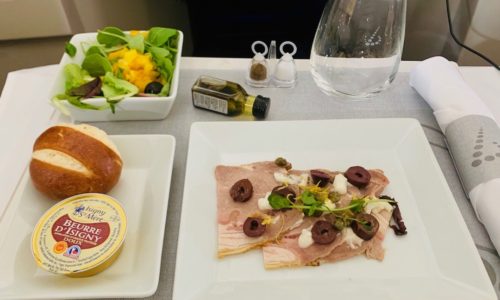
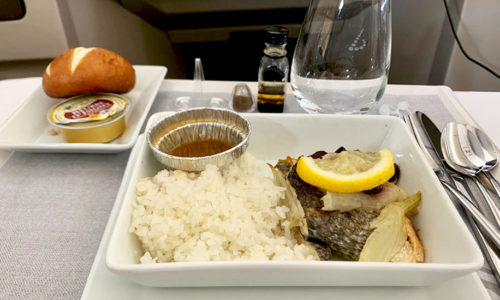
The meal service was pretty good. They served drinks and nuts as a snack before dinner. I think the food was better than economy class, but probably the middle of the pack for business class. I had the veal as an appetizer and it was very good, especially since I had no idea what to expect. The fish was dry but the flavor was decent. As expected, the wine was great!

Brussels Air reviews

The seats were lay flat seats, and fairly comfortable. I would say that the single seats give you more privacy, but when I laid down, I was a tad claustrophobic and it felt like I was in an MRI. However, I got use to it with time and slept well.

Étretat Normandy: A Travel Guide

Etretat Normandy

Étretat is one of the most beautiful places I have ever traveled to. It definitely makes the top of my travel list in France. Located in the Normandy region in northwestern France. It is known for its chalk cliffs and 3 natural arches. The area’s beauty drew several artists to its shores, like Eugène Boudin, Gustave Courbet, and Claude Monet. The three sites I would focus on are Les Jardins d’Étretat, Falaise d’Amont, and Falaise d’Étretat.

I did not get to spend much time in Les Jardins d’Étretat because I wanted to have more time on the cliffs themselves. However, you should not skip this garden. It is full of beautiful and strange sculptures, to include a bunch of large heads embedded into the ground and surrounding foliage. Once you make your way through the garden, there is a pleasant surprise at the top of the hill, Falaise d’Amont. This grassy hilltop overlooks some of the most beautiful scenery I have ever experienced. You can walk right up the edge of the cliffs to enjoy the views.

After enjoying Falaise d’Amont, you can either drive or walk over to Falaise d’Étretat and then start the climb up the cliffs to enjoy more spectacular views. As you climb the cliffs you will be amazed by the many surprises you will find along the trek.

Normandy - 10 things you need to know
View of Falaise d’Amont from Falaise d’Étretat

When to go

I visited Étretat in September and the crowds were beautifully low and the weather was perfect. I recommend going during good, dry weather to fully enjoy the experience. This adventure is completely outdoors and some of the pathways are made of pebbles that get slick when it rains.

What to expect

To get the full experience of the area, hiking is required and it may feel like a big hike for some people. The views are worth the walk up the cliffs. None of the locations are accessible by car, so if you cannot manage the hike, go to the beach and get a view of the cliffs from there

How to prepare

Even on a sunny, beautiful day, the wind can be in full force. The Normandy region tends to be cooler than the other parts of France no matter the season. When I went in early September, the weather was in the low 60s. It is also possible for the weather to quickly change because of its location along the coast. Walking shoes for the hike, a windbreaker or raincoat, and an umbrella may be handy.

How to get there

Whether you are coming from Paris or another city in Normandy, the best option to get to Étretat is to drive. It gives you the freedom to move around the area at your own speed. Be prepared to pay several tolls, no matter where you come from (ranging from 1.50-5 euro). If you cannot manage the drive, you can take public transportation to Le Havre, and then take the main bus (line 24) to Étretat. Check out the Étretat tourist website for the bus schedule. You can also take the Flixbus from Paris, but its schedule is seasonal and it does not run daily. Another option is to join a tour group for a day trip to Étretat. Viator.com offers tours, but I personally think they are a tad expensive.

Where to eat

There are a lot of touristy options and high-class, Michelin Star options in Étretat. If you are looking for something in the middle, I recommend Le Bistretatais. It is a tiny spot located one street back from the beach. The food is delicious. You can get a three-course, local cuisine meal for 23 Euros. I was one of two lucky tables not reserved for the night, so I recommend you make a reservation ahead of time.

Normandy – 10 Things To Know Before You Travel

Normandy - 10 things you need to know

Normandy is a beautiful region in the northwestern part of France. Home to the D-Day invasion during WWII, infamous cheese, delicious apple products, and coastal towns that have drawn artists to the region for decades. The region’s quiet beauty is a nice reprieve from the bustling nature of Paris. It is definitely on of my favorite places to visit. Here are 10 things to know before you travel to Normandy.

D-Day Beaches

I think Normandy is a beautiful region to visit all on its own, but I do not think a trip to Normandy would be complete without visiting the D-Day beaches. On 6 June 1944, Allied troops landed on 5 beaches, which are now known as Utah, Omaha, Gold, Sword, and Juno. It was a spectacular invasion that was instrumental in bringing down the Nazi regime. There is a lot to see and one could spend an entire week or more visiting all of the sites. No need to do it all, as most of the museums walk through the events.

Mont-Saint-Michel

Mont-Saint-Michel is a city built on a hill near the ocean, which almost everyday becomes an island due to tides.  Definitely a gem of Normandy. It is about a 2 hour drive from Paris and Caen. You could also join a tour group to Mont-Saint-Michel, but you will have more flexibility and opportunity to beat the crowds if you drive. Make sure you visit the beautiful gothic Abbey.

More to Normandy than D-Day Beaches and Mont-Saint-Michel

Even though the D-Day beaches and Mont-Saint-Michel are what originally drew me to Normandy, there is so much more. Many people only visit the region as a day trip from Paris, but I think it’s worth staying a week or more in the Normandy region. The beautiful coastline is worth exploring, as well as the many small and cute cities that are sprinkled all over the region. I recommend day trips to Fécamp, Étretat, and Honfleur. If you have even more time, Rouen and Giverny are a must see.

Rent a Car

Unlike Paris or other parts of Franc, getting around Normandy without a car will be very limiting. There is so much to see and so many extremely cute towns to explore. Since driving out of Paris can be a pain, I recommend that you take the train from Paris to Caen. Enterprise, Europcar, and Sixt are all located right outside the train station. There are several other rental car companies near by. Make sure to reserve a car ahead of time, especially if you need an automatic vehicle.

Base in one city

If you plan to spend more than one day in the Normandy region, I think it is best to pick one city to base in and rent a car to explore the area. During my travels, I chose Bayeux. It is a small, cute town that still has a slightly bustling vibe. There are several D-Day memorial sites in the town and it is about 40 min to 2 hours drive from several highlights in Normandy. If you prefer a slightly bigger city, then Caen is also a good choice.

Apples over Grapes

When it comes to France, most people think of the country’s wine and champagne. However, in Normandy, the apple is the king. There are multiple distilleries throughout Normandy where they turn apples into cider, pommeau des normandie (an aperitif), and apple brandy. All three are very different and worth trying. I recommend visiting Calvados Experience, which has the most impressive tour of its facilities and the process, and is about 40 meters west of Caen by car.

Eat butter, cream, and cheese!

Besides its apples, Normandy is known for it’s cows which produce magnificent milk. As a result, Normandy makes delicious dairy products. Camembert, Livarot, Pont l’Evêque, and Neufchatel are the most popular and well-known Normandy cheeses. If you have time, you should do a cheese tour during your trip. I visited Maison du Camembert in Camembert, but E. Graindorge in Livarot is also a very popular tour.

Pack for changing weather

Since many of popular cities and sites are long the coast, the weather can be a tad unpredictable. It can go from sunny and warm to drizzly and cool in a matter of minutes. Dress in layers and keep a travel umbrella or raincoat with you during your travels.

Do you speak English?

If you ask that question in Normandy, the answer is likely to be no or just a little. Unlike Paris, many people in the region do not speak English. It is not uncommon to not have train announcements translated into English. Also, museums in smaller cities may only have signs in French. You can always ask for an audio translation, and some sites will have detailed pamphlets in English. Google translate or a travel size French-English dictionary can also be very handy.

Be prepared to walk

While renting a car is the best way to get around Normandy, once you get to your destination, park your car and walk the city. Many of these towns are better explored on foot. It will give you the opportunity to find surprises and see all of the sites. During my week in Normandy, I walked over 40 miles. Now, that may not work for every traveler, but you should still be prepared to do a decent amount of walking during your trip.