I rarely drive whenever visiting another country. As a matter of fact, I’ve only driven in Kenya and France. I can be quite an aggressive driver but it also stresses me out. I prefer to sit back on a tour bus, train, or metro to get me where I need to go. It takes the stress out of travel. I definitely do not want to drive in crowded, traffic heavy cities, where you spend most of your days getting from place to place. However, there are certain locations where I think it is way worth it to drive, and the countryside of France is one of those places.
As an American driving in France, my first question was which side of the road do they drive in in France. I spent two years driving on the left side of the road in Kenya. While I eventually got use to it, picking up that skill again, while on vacation, is not what I wanted to do. Thankfully, the French drive on the right side of the road.
I do not think I would ever attempt to driving in Paris or even parts of southern France where the cities are much more walkable and public transportation is readily available. However, in the countryside, renting a car is a must if you want the freedom to see the best sites. It was at the forefront of my mind as I planned my trip to France. I found that having a car gave me so much freedom. I never felt rushed and I was able to enjoy everything exactly the way I wanted to. As you prepare for your adventures, here are a few tips for driving in France.
Renting a Car
Renting a car in France is fairly simple and straight forward. Several US companies, such as Enterprise, Sixt, and Hertz will allow you to easily book rental car reservations in France. You should reserve your vehicle well in advance, especially if you want an automatic car. Rental car companies in Europe have more manual vehicles on hand, so reserving early will ensure that you get what you want.
Make sure you get the insurance that comes with the vehicle. So much can go wrong while driving in an unfamiliar location, so it is better to be safe than sorry. I also got supplemental insurance to cover the windshield and tires. Apparently it would have cost me between several hundreds to $1,000 to fix either of those things if they were damaged. You can drive in France with a US license, but I also got an international driver’s license from AAA before my trip just in case I needed it. However, no one ever asked to see it.
Getting around
A lot of newer cars have navigation systems built into the vehicle, but they do not always accurately identify locations. I used Google Maps and Apple Maps for the majority of my trip on my iPhone. They worked perfectly and regularly gave me multiple route options to get to my destinations.
On the road
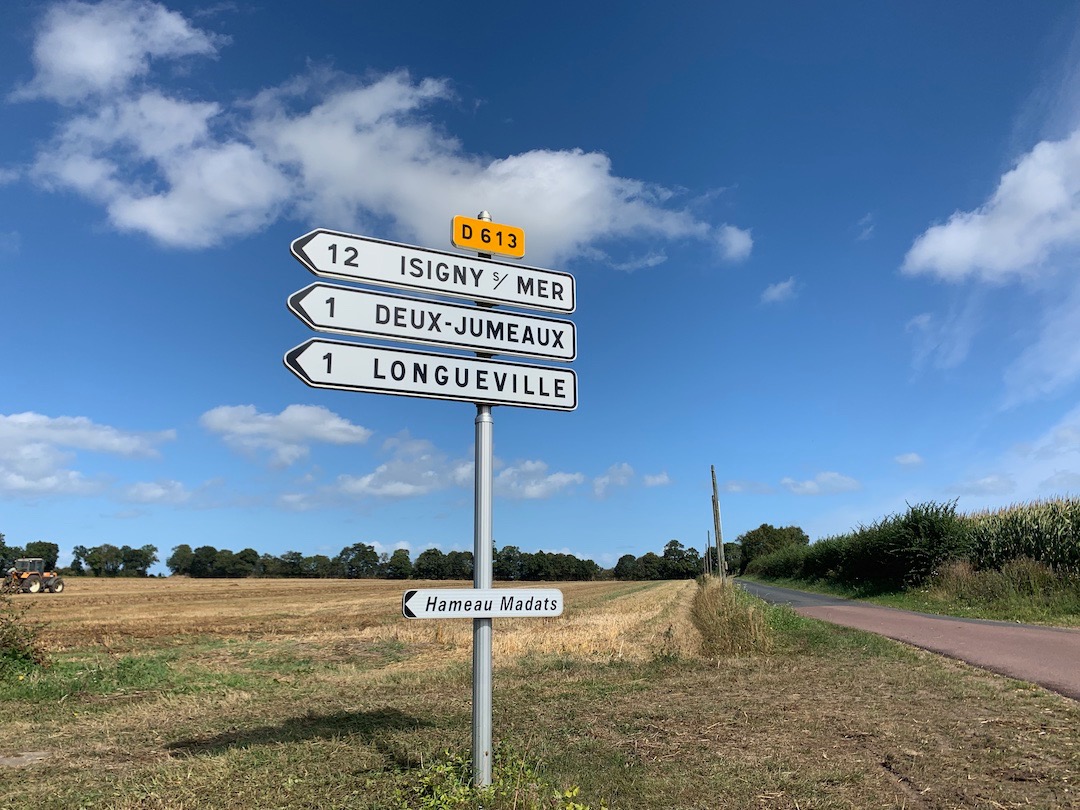
I found road and traffic signs in France pretty easy to follow and I was never really confused about what I should be doing. However, I also think generally followed what I saw other people doing. Some things to note.
Roundabouts: There are a lot of roundabouts, particularly in the countryside. They sometimes pop up out of no where. I think it is pretty easy to figure out who has the right away, but I did sometimes hesitate if I felt like other drivers were being a tad aggressive.
Traffic lights: Traffic lights are generally on the right side of the road instead of hanging overhead like in the United States. I note this, because I tend to pull all the way up to the line when I stop at a light. However, if you do this in France, you may be slightly past the light and will be unable to tell when it changes to green.
Slow drivers: Slow drivers should stay to the right. Once upon a time, slow drivers drove in the right lane in the United States. Not anymore! However, in France, the left lane on the highway it strictly used for passing. It is normal to see drivers moving back and forth from the right lane to the left as they hop around slower drivers.
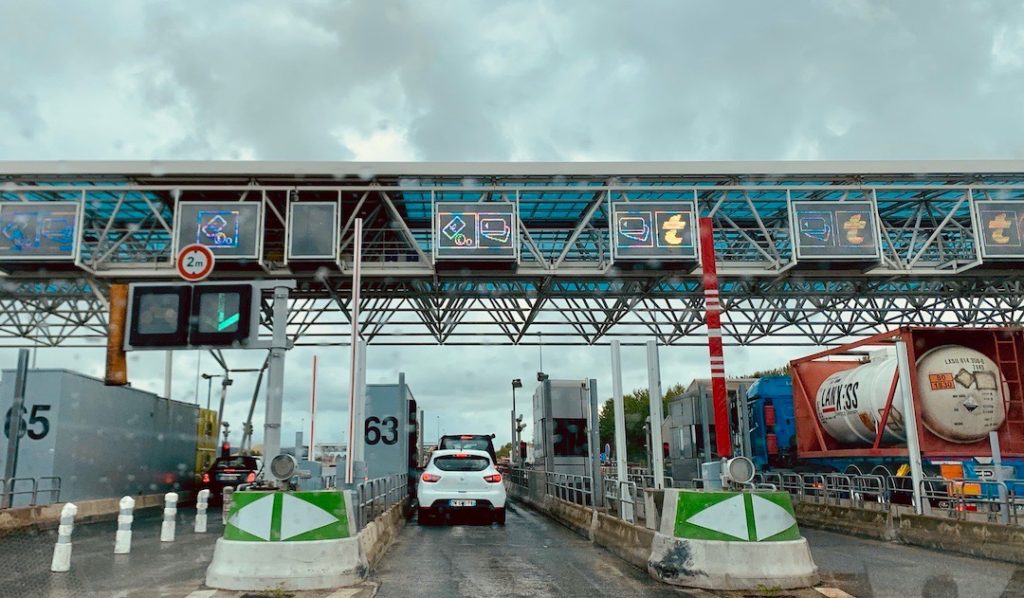
Tolls: I think toll booths are impossible to avoid if you are on the highways in France. However, they are super easy to get through. No cash? No worries. Toll booths accept credit cards. You can insert your card and be on your way in less than 30 seconds. They are not that expensive. However, depending on the duration of your trip, you may go through several toll booths, adding to the cost.
Speeding: One of the best tips for driving in France is to watch your speed. I received a ticket during my last trip to France, caught by a speed camera, which is the easiest way to get caught on the road. Apparently there are warnings that the cameras are coming. If you do not know what to look out for though, those warnings can be easy to miss. I did not see too many cops while I was there, but they are there, hiding around behind bushes!
Tickets are relatively cheap compared to what you would pay in the US. If you are driving a rental car, the rental company will let you know via email that the car was caught by a speed camera. Then, they will charge your credit card accordingly. You may also receive an Avis de Contravention, which is a notice that you need to pay your ticket, in the mail from the French government.
Tip: Speed limits change rapidly in the countryside with little warning. If you are approaching a small town, you should assume that you will have to lower your speed by 20-30 kilometers.
Parking: Tips on driving in France must include parking. There are very few free places to park. It is usually easier to just pay for parking than circling neighborhoods looking for a free spot. I ended up downloading two parking apps; whoosh and pay by phone to make parking easier. Parking is not crazy expensive, and paying for parking ends up being way less stressful.
Filling up the tank: My final tips for driving in France is less of a tip and more of a warning. Gas is expensive! In late summer 2019, it cost me $20-30 more to fill up my tank in France than in the US. I found the cheapest gas station I could find near my lodging. I only used that station for the duration of my trip. Note that most gas stations will put a hold on your credit card for $120-130 no matter how much it actually cost to fill up your tank. The gas station usually lifts the hold in 1-3 days. If you cannot manage the hit to your credit card each time, then I recommend paying in cash.